

Quick answer: make the next session better
A useful boxing rest day is not a day when you must prove how committed you are by sneaking in another hard workout. It is a planned change in load so your body and attention can absorb the work you already did. For many beginners, the best rest day includes normal daily movement, regular meals, enough fluid, a consistent bedtime, and no hard rounds. Some days can include an easy walk or brief mobility. Other days should be genuine rest.
Use one question to guide the decision: “Will this choice help me return with steadier technique?” If light movement leaves you looser and more energetic, keep it easy. If it makes heavy legs heavier, stop. Ordinary soreness can be monitored; sharp pain, swelling, weakness, numbness, dizziness, chest pain, or symptoms that worry you deserve a different response. Tell your coach, and seek qualified medical care when appropriate. Recovery supports boxing, but an article cannot diagnose an injury or decide when a medical condition is safe for training.
The beginner mistake: turning every day into a test
A new boxer often leaves a good class excited and slightly sore. The next morning, that excitement turns into a challenge: run farther, hit the bag again, add push-ups, and prove the first session was not a fluke. The problem is not motivation. The problem is that fatigue changes movement before the beginner recognizes it. The stance becomes narrow, the rear heel floats without purpose, the shoulders climb, and the guard returns late.
Repeating those shapes at tired speed does not create bonus skill. It rehearses compensation. A better plan protects the quality of the next coached session. Put the gloves away for the day. Walk, work, eat, and sleep like a person preparing to learn again. Write one note from class while it is fresh, but do not turn the note into an unsupervised punishment workout. Consistency is measured across weeks, not by how much discomfort you can collect in twenty-four hours. The athlete who can alternate effort and recovery usually has more useful rounds available than the athlete who treats every quiet day as a threat.
Separate soreness, fatigue, and pain
Soreness is often a broad, tender feeling in muscles that recently worked. Fatigue can feel like low energy, heavy limbs, slower reactions, irritability, or unusual difficulty completing familiar tasks. Pain may be sharp, localized, worsening, associated with swelling, or linked to a specific movement. These descriptions are not a home diagnosis, but they help you report what you notice instead of hiding everything under the word “hurt.”
Use location, timing, and function. Where do you feel it? When did it begin? Can you walk, raise the arm, make a fist, and move through ordinary daily tasks without symptoms worsening? Do not repeatedly punch, jump, or stretch aggressively just to test an irritated area. MedlinePlus notes that inadequate rest, repeated motion, poor form, and progressing too quickly can contribute to exercise injuries. If pain does not settle with appropriate self-care, keeps returning, or changes how you move, contact a qualified health professional. A coach can adjust training, but a coach should not pretend to diagnose a joint, nerve, or medical problem from across the ring.
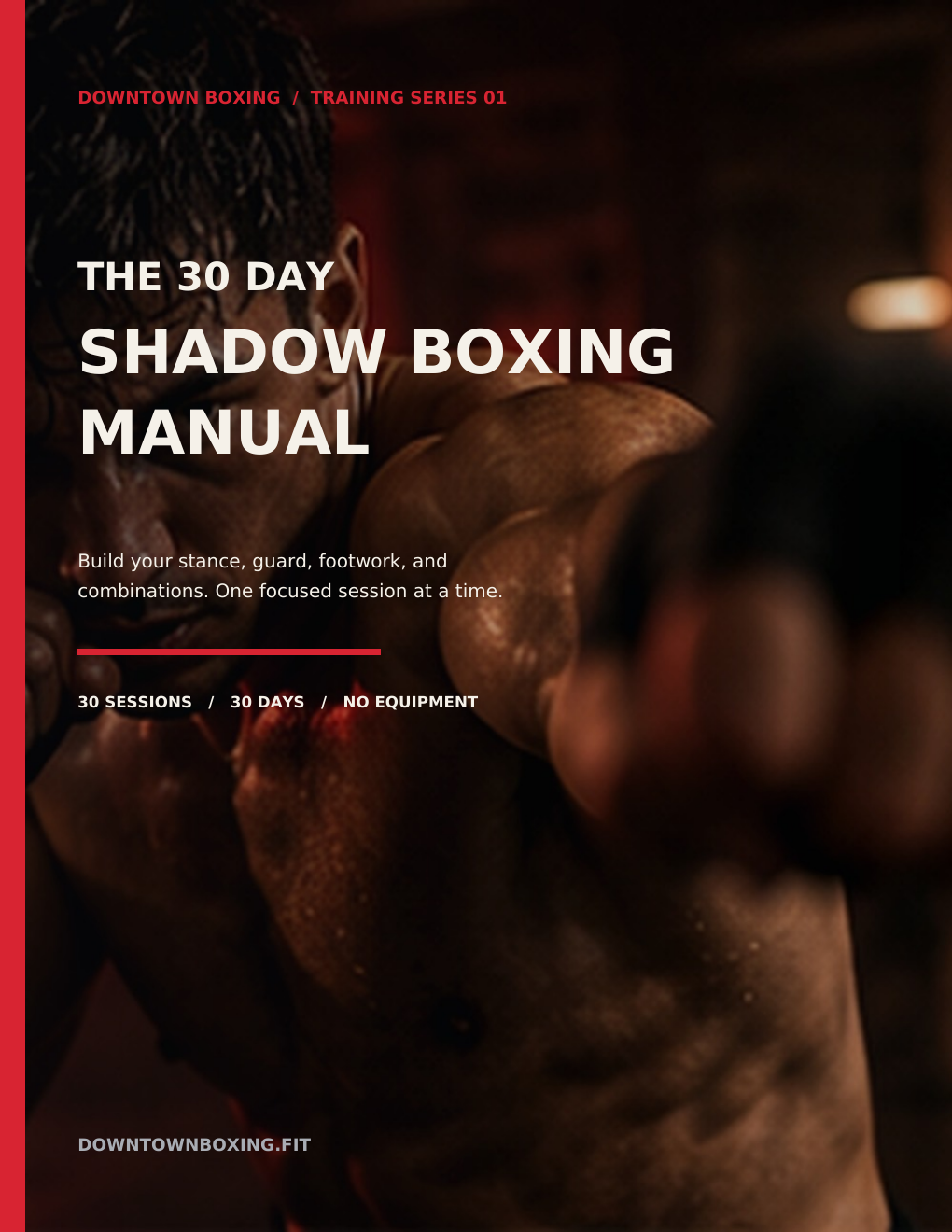
Keep structure without adding another hard round
The verified 30 Day Shadow Boxing Manual offers 30 no-equipment sessions. Use a planned session on a training day, not as a reason to override a needed rest day.
Disclosure: This is a Downtown Boxing digital product. The promotional link supports the site; the guide does not replace coaching or medical care.
Use a red, yellow, green decision
Green means normal energy, mild soreness that improves as you move, and no warning symptoms. Easy walking and a few relaxed mobility movements may fit. Yellow means unusually heavy legs, poor sleep, elevated stress, persistent soreness, or a technique session that felt worse than expected. Choose less activity, shorten the plan, and tell the coach what changed. Red means sharp or escalating pain, visible swelling, loss of normal function, fainting, chest pain, severe shortness of breath, confusion, or another alarming symptom. Stop training and seek appropriate help.
The colors are a communication tool, not a medical clearance system. They keep the beginner from making every decision with pride. Write the color beside the next class on your calendar. If yellow repeats for several days, do not keep moving the goalposts and calling it discipline. Review sleep, food, training volume, life stress, and symptoms with the right professional. MedlinePlus lists declining performance, persistent tiredness, sleep trouble, heavy limbs, reduced motivation, and more frequent illness among signs that exercise load may be too high.
Active recovery should feel obviously easy
Active recovery is low-demand movement used between harder sessions. The goal is not to improve conditioning that day. Try ten to twenty minutes of comfortable walking, an easy stationary bike, or gentle mobility that never becomes a contest. You should be able to breathe normally and hold a conversation. Finish feeling the same or better, not drained. If you need a timer, score, sweat target, or heroic playlist to keep going, the session may be turning into training.
ACSM describes active recovery as lower-impact activity that supports recovery without excess strain and also recognizes the value of full rest days during heavy training. That distinction matters. Light movement is an option, not a tax you must pay for sitting down. Florida heat can turn an easy outdoor walk into a harder session, so use shade, a cooler time of day, or an indoor option. Stop when symptoms increase. A rest day succeeds when it lowers the cost of the week. It does not need to produce a fitness number, a calorie total, or a story dramatic enough to post.
Keep boxing rhythm without throwing a round
Beginners sometimes fear that one quiet day will erase their timing. Skill does not disappear overnight. If you want a tiny connection to boxing, use a three-minute mental review instead of physical rounds. Stand normally, not in stance, and recall one coaching cue from the last class. Picture the feet setting before the jab, the glove returning home, and the eyes staying level. Then close the notebook and continue the rest day.
Do not rehearse dozens of corrections. One accurate cue is more useful than a tired catalogue. You can also prepare the environment: dry the gloves, wash the wraps, refill the water bottle, and confirm the next class on the Downtown Boxing schedule. These jobs protect training without adding impact. Avoid hard shadowboxing, weighted punches, maximal stretching, or bag work disguised as “just checking the technique.” The nervous system learns from clear practice and from adequate recovery. The best evidence that the rest day worked is not that you stayed busy. It is that the next warm-up feels coordinated and the coach can build on your last lesson.
A six-minute mobility option
Use this only when you are in the green zone and ordinary movement feels comfortable. Spend one minute walking slowly. Then make five controlled ankle circles each way, five gentle knee bends within a comfortable range, five hip hinges with a long spine, and five slow upper-back rotations on each side. Finish with easy shoulder blade movements and relaxed wrist circles. Nothing should bounce, pinch, or force a larger range than you own.
Mobility is not a flexibility exam. The purpose is to notice whether normal movement becomes easier, not to chase a dramatic stretch. Keep the feet flat during knee bends. In the hip hinge, send the hips back without rounding aggressively. During upper-back rotation, let the ribs turn while the pelvis stays mostly quiet. If a joint is injured, recently treated, or medically restricted, follow the plan given by your qualified clinician. MedlinePlus advises stopping exercise that causes pain and progressing gradually. After six minutes, stop. If you feel tempted to add rounds because you are warm, remember the assignment: arrive at the next class ready, not pre-fatigued.
Sleep is the anchor, not the reward
Many recovery plans become complicated while the bedtime remains random. Start there. The CDC says adults ages eighteen to sixty should generally get seven or more hours of sleep, while individual needs and sleep quality still matter. Keep the wake time reasonably consistent, dim the room, reduce late stimulation, and give yourself enough time in bed for the sleep you need. A rest day with five hours of sleep is not fully repaired by a massage gun or supplement.
Use the evening to lower friction. Pack the gym bag before dinner. Put the phone away from the pillow. Avoid turning tomorrow’s class into a late-night worry session. If sleep problems are frequent, severe, or affecting daily life, talk with a healthcare provider. Do not self-prescribe extreme training to “wear yourself out.” Poor sleep can change attention, mood, reaction, and the way effort feels. Boxing asks you to read cues while controlling your body around other people, so alertness is part of safety. Treat sleep as scheduled preparation for the room, not as something you earn only after exhausting yourself.
Eat and drink like another session is coming
Recovery does not require a perfect menu. It requires enough food across the day, regular protein sources, carbohydrate to restore training energy, colorful produce, and fluid that matches your needs and conditions. Build ordinary meals: rice or potatoes, eggs or chicken, beans, yogurt, fruit, vegetables, and water. Use foods you tolerate. Do not turn a rest day into punishment by skipping meals because you moved less.
Hydration is also personal. Heat, sweat rate, session length, body size, medications, and health conditions can change needs. Drink regularly, use thirst and urine color as rough context rather than a competitive target, and follow medical advice when fluid or sodium intake is restricted. Pair this article with the pre-boxing fuel guide before your next class. Supplements cannot repair an overloaded schedule. If appetite, weight, fatigue, or recovery changes unexpectedly, speak with a qualified health professional. The rest-day meal should make tomorrow feel possible, not turn eating into another performance test.
Rest, active recovery, or training?
| Choice | Best fit | What it should feel like |
|---|---|---|
| Full rest | Heavy fatigue, hard week, poor sleep, or coach-planned day off | Normal life movement without structured exercise |
| Active recovery | Green-zone soreness that improves with easy movement | Conversational, brief, and easier than a warm-up |
| Technique training | Scheduled session with normal readiness | Coached, purposeful work with controlled quality |
| Medical evaluation | Red flags, worsening pain, swelling, or lost function | Training stops while the right professional assesses the problem |
Do not choose by guilt. Choose by the demand you can meet with safe, repeatable form. When uncertain, tell the coach exactly what you feel and what changed since the last session.
Build the week before fatigue makes the decision
A beginner schedule works best when hard days and easier days are visible in advance. Start with coached boxing sessions, then place strength work and optional conditioning around them instead of stacking everything wherever space appears. Protect at least one day that can become full rest. During a demanding week, remove optional work before removing sleep. Tell the coach about other sports, physical labor, running, or lifting because the body counts all of it.
A simple week might include boxing on Monday and Wednesday, easy walking on Tuesday, full rest on Thursday, boxing or open gym on Friday, and flexible weekend activity based on readiness. That is only an example, not a prescription. Your age, training history, health, work, and goals matter. Explore the coached boxing programs and choose a membership option that supports a sustainable rhythm. The strongest plan is not the one with the most boxes. It is the one you can repeat while technique, energy, and enthusiasm remain available.
Your boxing rest-day checklist
- Check soreness, energy, sleep, mood, and normal movement.
- Choose green, yellow, or red without using pride as the judge.
- Take full rest when fatigue or the weekly plan calls for it.
- If appropriate, keep active recovery conversational and brief.
- Do not test pain with repeated punches, jumps, or forced stretching.
- Eat regular meals and drink according to your needs and conditions.
- Protect a consistent bedtime and enough opportunity for sleep.
- Dry gloves, wash wraps, and prepare water for the next class.
- Write one coaching cue; do not create an extra punishment workout.
- Tell the coach about persistent fatigue, pain, illness, or outside training.
- Seek qualified care for warning signs or symptoms that do not improve.
Finish the checklist in a few minutes. Recovery should simplify the day. If managing the routine creates more anxiety than the routine solves, return to the basics: normal meals, ordinary movement, enough sleep, and honest communication.
Frequently asked questions
Should I shadowbox on a rest day? If the day is planned as full rest, no. On an active-recovery day, a brief mental review is usually enough. Save physical rounds for training.
Is soreness a reason to skip class? Mild soreness and pain are not the same. Report symptoms to the coach, reduce load when appropriate, and seek medical guidance for concerning or persistent problems.
Do I need a recovery gadget? No. Sleep, appropriate load, food, fluid, and communication matter more than collecting devices.
How many rest days do beginners need? There is no universal number. Training load, age, health, sleep, and outside activity matter. ACSM notes that full rest days are important during heavy cycles and suggests one or two during high-volume periods.
Can I stretch hard to remove soreness? Do not force painful range. Use gentle movement only when comfortable and follow professional guidance for injuries.
What if I am tired for weeks? Persistent fatigue, falling performance, sleep trouble, mood changes, or repeated illness deserve a real review with qualified medical support.
Sources and next steps
This guide uses conservative coaching advice and public health guidance. Read the American College of Sports Medicine recovery overview, the CDC sleep recommendations, the MedlinePlus overview of excessive exercise, and the MedlinePlus exercise-injury guide. These sources support planning rest, recognizing persistent fatigue, progressing gradually, and seeking care when symptoms are concerning.
For your return, review the five-minute boxing cooldown and the guide to keeping stance shape when tired. Then contact Downtown Boxing if you need help choosing an appropriate beginner class. Online guidance can organize questions. It cannot examine an injury, replace individual medical advice, or guarantee that a symptom is safe.
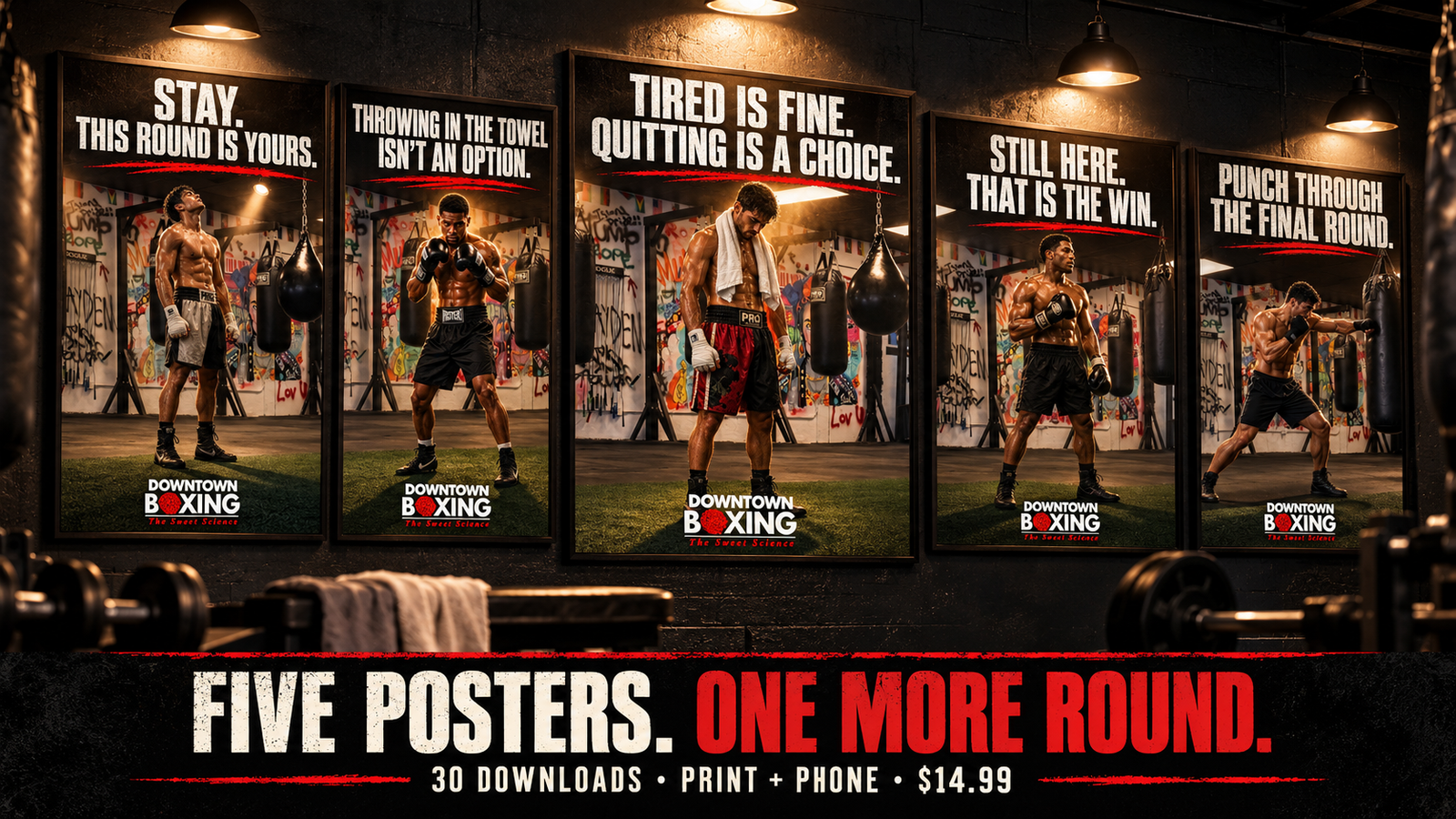
Gear that supports the routine
The verified Downtown Boxing Wall Art five-poster bundle is a digital download with six sizes per design. Use visual cues as reminders, not as substitutes for recovery or coaching.
Disclosure: This is a Downtown Boxing digital product. The promotional link supports the site.
Return with something worth training
The rest day does not need to feel impressive. Let it be quiet enough for the previous session to settle. Move only as much as the plan and your condition support. Eat normal food, drink appropriately, prepare the gear, and go to bed with enough time to sleep. When the next class begins, notice the result: feet that can hold stance, shoulders that can relax, and attention that can hear the correction.
Tell Coach Ramon how the week felt before the timer starts. If the body is ready, train with purpose. If it is not, adjust without shame. Long-term boxing is built by people who can work hard and by people who can stop hard work at the right time. Those are not opposing identities. They are the same skill viewed from two sides: managing effort so good technique remains repeatable. Protect the next clean round, and let recovery earn its place in the plan.
Editorial note: The hero is an original AI-generated image created for this article and reviewed for natural boxing anatomy. Recovery guidance was checked against the cited ACSM, CDC, and MedlinePlus sources.