
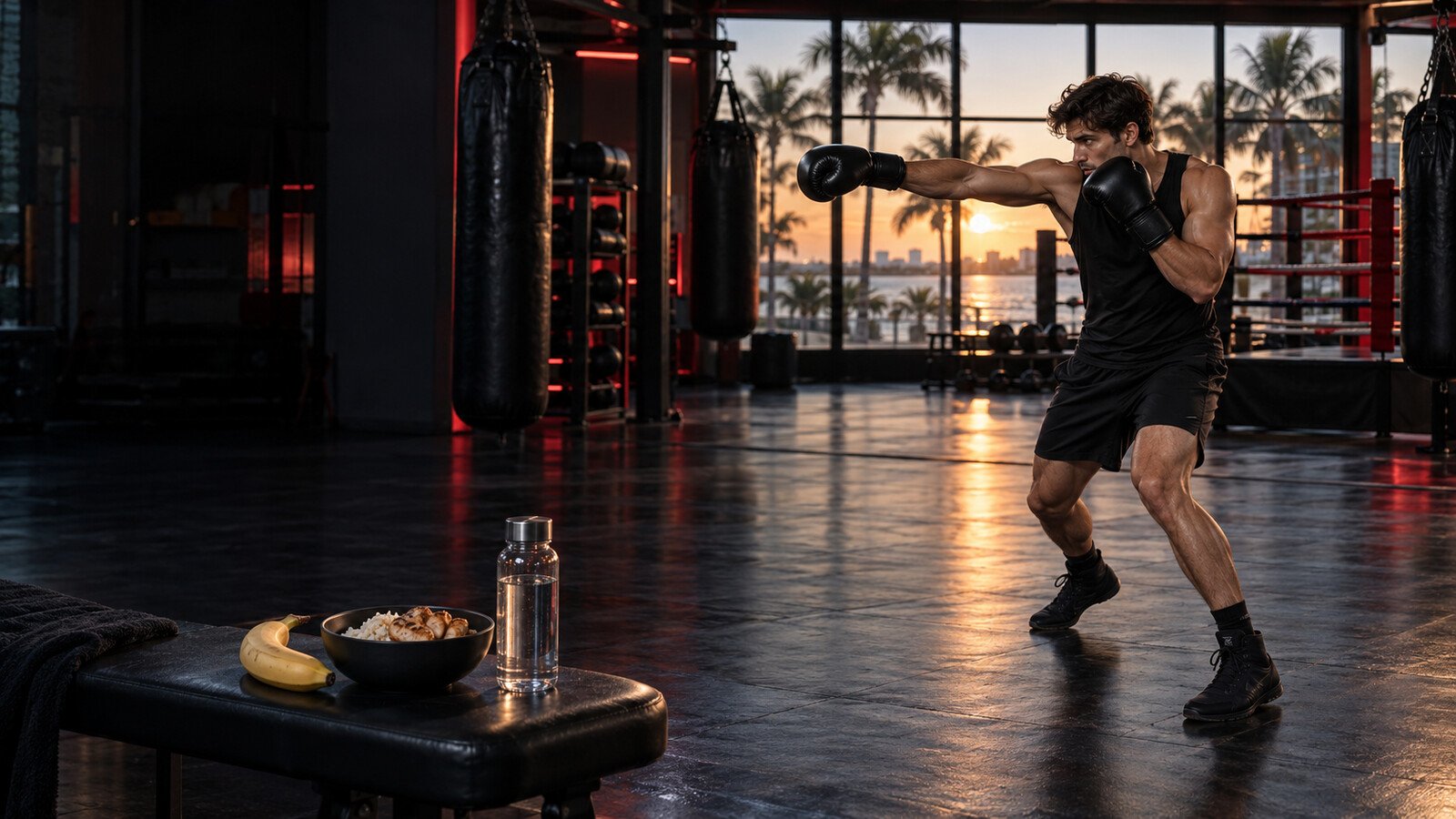
Quick answer: fuel the work without crowding the stomach
A useful pre-boxing meal gives you energy for repeated rounds without making footwork feel like a fight against dinner. For most beginners, that means familiar carbohydrate, a moderate amount of protein, enough fluid, and a portion that matches the time before class. A normal meal can fit three or four hours before training. A smaller snack often fits one or two hours before. When only a few minutes remain, simple, easily digested carbohydrate may be more comfortable than a full plate.
There is no magic fighter food. Rice, oats, potatoes, bread, fruit, yogurt, eggs, chicken, beans, and water can all belong in a practical plan. The best choice is one you tolerate, can afford, and can repeat. Start with a modest portion, notice your energy and stomach comfort, then adjust one variable at a time. Do not use a hard class to test an unfamiliar supplement, an oversized meal, or a rapid weight-cutting trick. Fuel should make the round clearer, not become the story of the round.
The evening-class problem begins hours before the bell
Picture the common Clearwater schedule. Lunch happened at noon. Work ran late. Traffic ate the time you planned to use for dinner. You walk into the gym at six with coffee in your stomach and a protein bar buried under hand wraps. The first round feels sharp because adrenaline is generous. By the third, the guard is heavy, attention wanders, and every correction sounds harder than it should. That crash did not begin when the timer started. It began when the day had no bridge between lunch and class.
The repair is less dramatic than the problem. Put a planned eating point on the calendar before you leave home. It might be a rice-and-chicken lunch with a banana later, yogurt with oats after work, or toast and fruit when the afternoon gets crowded. The food does not need to look like a fitness advertisement. It needs to arrive early enough to digest and contain enough carbohydrate to support movement. A beginner usually improves fastest by solving the missing meal before buying a new product.
What the round actually asks from your fuel
Boxing is not one steady effort. You step, punch, brace, breathe, listen, and repeat. A quiet second can become a fast exchange, and a technical round can turn into conditioning when your stance begins to leak. Carbohydrate is an important fuel for this kind of work, while protein supports repair across the day. Fluid helps the body regulate temperature and move nutrients, especially when Florida heat follows you through the gym door. Those jobs overlap, but no single nutrient does all of them.
The joint position paper from the Academy of Nutrition and Dietetics, Dietitians of Canada, and the American College of Sports Medicine emphasizes that food, fluid, and timing should match the training situation. That is a guide, not a demand for perfect numbers. Your class length, recent meals, body size, sweat rate, medical needs, and goals all matter. A coach can help you understand the session. A registered dietitian or clinician is the right person for individualized nutrition, allergies, diabetes, digestive disease, eating-disorder history, or a medically supervised weight plan.
Turn steady fuel into structured practice
The verified 30 Day Shadow Boxing Manual is a 40-page digital guide with 30 no-equipment sessions. It can help organize controlled home rounds between coached classes.
Disclosure: This is a Downtown Boxing digital product. The promotional link supports the site; the guide does not replace individualized coaching or nutrition care.
Build the three-hour meal around four simple parts
When class is three or four hours away, build a normal meal with four parts: a familiar carbohydrate, a moderate protein, produce, and fluid. Rice with grilled chicken and vegetables works. So do potatoes with eggs and fruit, pasta with lean meat and a side salad, or beans with tortillas and salsa. Keep the meal recognizable. Training day is not the moment to turn one plate into a chemistry experiment. The portion should leave you satisfied, not sleepy and overfilled.
Fat and fiber support health, yet very large amounts close to training can slow digestion or feel heavy for some people. You do not need to remove them; you need to notice comfort. A smaller amount of olive oil, avocado, nuts, or higher-fiber vegetables may work well several hours before class. If your stomach still feels full during rope work, reduce the portion next time or move the meal earlier. Record the change. Guessing after every session creates noise, while one controlled adjustment creates useful information.
Use the ninety-minute snack as a bridge
A snack one or two hours before boxing should bridge the day, not imitate dinner. Choose a carbohydrate base and add a small protein if you tolerate it. A banana with yogurt, toast with a thin spread of peanut butter, cereal with milk, applesauce with a few crackers, or a small turkey sandwich can work. The American Orthopaedic Society for Sports Medicine suggests meals about three to four hours before activity and snacks one to two hours before, which is a practical place to begin.
Portion matters as much as the food name. A peanut butter sandwich can be light or dense depending on how it is built. Yogurt can be comfortable alone and heavy when loaded with nuts, seeds, and a giant serving of granola. Start smaller than the meal you would eat at home after training. If the snack disappears without stomach pressure and your final rounds remain focused, keep it. If hunger returns early, add a little carbohydrate next time. If the warm-up feels crowded, reduce the portion or eat sooner.
When only ten minutes remain, simplify
Sometimes the plan breaks. You reach the parking lot and realize lunch was the last real food you ate. With only five or ten minutes before movement, a full meal is unlikely to become useful fuel in time and may sit badly. The American Heart Association recommends easily digested carbohydrate such as a piece of fruit when the window is that short. A banana, a small applesauce pouch, or a few plain crackers may be more practical than a heavy protein shake or fried food.
Treat this as a rescue, not the daily system. Eat slowly, take a few sips of water, and tell the coach if you feel light-headed, weak, nauseated, or unusually unwell. Do not try to erase a missed day of eating with a huge amount of sugar seconds before class. Afterward, build a normal recovery meal and repair tomorrow’s schedule. The lesson is not that emergency snacks are bad. The lesson is that the best pre-boxing fuel often comes from a decision made before the afternoon became busy.
Match the choice to the session
A technical class built around stance, shadowboxing, and controlled partner drills may feel comfortable with a lighter snack. A longer session that adds hard bag rounds, conditioning, or sparring may require a fuller earlier meal. The answer is not automatically more food right before class. It is usually better planning across the day. Look at what you will do, when you last ate, and how long the session lasts. Then choose the smallest plan that reliably supports the work.
Do not copy the meal of the largest or most experienced boxer in the room. Their body, training history, total workload, and goals may be different. Your useful comparison is your own repeated session. Did the snack support clear decisions? Did your stomach stay calm during pivots? Could you recover between rounds? Did you arrive home ravenous and overeat because the snack was too small? These questions turn nutrition into a training variable instead of a collection of rules borrowed from strangers.
Pre-boxing fuel choices compared
| Time before class | Practical starting choice | Main watch-out |
|---|---|---|
| 3–4 hours | Normal meal with carbohydrate, protein, produce, and fluid | Oversized or unfamiliar portions |
| 1–2 hours | Small carbohydrate-based snack with optional light protein | Too much fat or fiber for your stomach |
| 5–10 minutes | Small, familiar, easily digested carbohydrate | Trying to replace a missed day of eating |
| During many short classes | Water according to thirst and conditions | Using energy drinks as hydration |
Hydration starts before the gloves go on
A bottle beside the ring cannot fix an entire day without fluid. Drink regularly before class and arrive with a filled, unbranded bottle you can reach during breaks. The American College of Sports Medicine notes that many people training less than sixty to ninety minutes in normal conditions do not need an elaborate electrolyte routine. Clearwater heat, a warm gym, heavy sweating, or a longer session can change the picture, so pay attention to conditions and your own sweat losses.
Water is a strong default for many ordinary classes. Sports drinks can be useful when a session is long, hot, or especially demanding, but they are not the same as energy drinks. Avoid using high-caffeine products as a substitute for sleep, meals, or water. If you have kidney, heart, or blood-pressure concerns, take medication that affects fluid balance, or have been told to limit sodium or fluid, follow medical guidance instead of generic advice. Stop training for dizziness, faintness, confusion, chest pain, or other alarming symptoms.
Read your stomach like you read your stance
Good pre-training fuel should fade into the background. You notice stable energy, normal breathing for the pace, and a stomach that does not demand attention. A meal that produces burping, cramping, reflux, nausea, or a heavy slosh is information. It may have been too large, too late, unusually fatty, unusually high in fiber, or simply unfamiliar. Do not label the entire food bad after one rough night. Change one factor and test it during an ordinary class, not before an important sparring session.
Keep a four-line note: what you ate, when you ate, what the session included, and how energy and comfort felt. Add sleep and heat only when they clearly mattered. After three or four similar sessions, patterns become easier to see. You may discover that yogurt works ninety minutes before technique class but not before jump rope, or that rice at lunch needs an afternoon banana to reach an evening session. Personalization begins with observation, not a complicated spreadsheet.
Avoid the crash-and-chase cycle
The crash-and-chase cycle starts with too little food, continues with a stimulant or candy rush, and ends with a late-night meal eaten faster than hunger can think. It feels disciplined in the morning and chaotic by bedtime. Boxing exposes the pattern because coordination and patience are expensive when energy is low. Break the cycle by making lunch substantial, placing a planned snack before class, and having recovery food ready at home. A steady plan is less exciting and far more useful.
Be skeptical of any product that promises clean energy while asking you to ignore total eating, hydration, sleep, or medical history. Supplements can carry contamination, dosing, or interaction risks. Food-first does not mean supplements are always forbidden; it means they should solve a defined problem with qualified guidance. If you compete, check governing-body and anti-doping resources before using performance products. Beginners do not need a cabinet of powders to learn the jab, breathe through a round, and show up again on Thursday.
Pack one dependable gym-bag backup
Your backup should survive the realities of the day. Shelf-stable applesauce, a banana, plain crackers, a small cereal pack, or a simple bar you have already tolerated can live near the top of the bag. If the food requires refrigeration, use an insulated bag and ice pack. Check dates, replace crushed packages, and never store food beside damp wraps for a week. The purpose is not to carry a pantry. It is to prevent one delayed meeting from turning class into an empty-tank experiment.
Pair the backup with a decision rule. If your last meal was more than several hours ago and class begins soon, use the small snack. If you ate a complete meal recently and feel comfortable, leave it for another day. If you feel sick, unusually weak, or unable to keep food or fluid down, skipping hard training may be the smart choice. A backup plan supports judgment; it does not override warning signs. Replace what you use as soon as you unpack your gloves.
Build a repeatable week instead of a perfect day
Choose two pre-class meals and two snacks that share ingredients. Rice, chicken, and vegetables can become lunch; leftover rice can pair with eggs the next day. Yogurt, oats, and bananas can cover breakfast or the afternoon bridge. Bread can support toast, a turkey sandwich, or an emergency snack. Repetition reduces decisions, and shared ingredients reduce waste. You can change seasoning and produce without rebuilding the system every week.
Schedule the food beside training, not as a separate project. On class days, pack the snack when you pack wraps. On grocery day, buy enough bananas for the sessions you actually plan to attend. On late nights, keep a ten-minute recovery meal available. This is how nutrition becomes part of practice. The plan should survive work, family, and ordinary fatigue. If it only works when Sunday meal prep is perfect, it is too fragile for a beginner who is still learning how boxing fits into life.
Use a seven-day experiment to find your starting point
For one week, keep the training plan stable and test one meal pattern. Eat a familiar meal about three hours before two sessions, then use the same small snack ninety minutes before another comparable session. Record comfort, focus, and energy in the last round. Do not judge the plan by sweat, soreness, or scale weight alone. The goal is to find a timing pattern that lets you train skillfully and recover without a late crash.
At the end of the week, keep what worked and adjust the smallest weak point. If you were hungry at the bell, add a little carbohydrate earlier. If the stomach felt heavy, reduce the portion or move it back. If energy was fine but sleep suffered, look at late caffeine and post-training meal timing. Repeat the test before making another change. This patient process looks almost too simple, which is why many people skip it. In boxing, simple things repeated under control are often the things that hold up under pressure.
Your pre-boxing fuel checklist
Before class, ask whether you ate a normal meal in the last three or four hours, whether you packed a tested snack, and whether your bottle is filled. Check the session plan and the weather. Choose food you know, keep the portion comfortable, and avoid experimenting with supplements. During the warm-up, notice stomach pressure, dizziness, unusual weakness, or nausea. Tell the coach and change the session when safety requires it.
After class, write one sentence about the final round. Stable energy and a quiet stomach mean the plan deserves another test. Hunger halfway through class suggests more or earlier fuel. Heaviness suggests less food, more time, or a different choice. Refill the backup snack and prepare the next meal. If symptoms persist, if food restriction feels difficult to control, or if you are pursuing weight loss for competition, involve a registered dietitian or qualified clinician. Good fueling protects both the round and the person doing it.
Print-free pre-class checklist
- Confirm when you last ate a normal meal.
- Match the portion to the time before class.
- Choose familiar food, not a new supplement.
- Fill your water bottle before leaving.
- Pack one tested backup snack.
- Notice stomach comfort during the warm-up.
- Stop and speak up for alarming symptoms.
- Record one sentence about the final round.
Frequently asked questions
Should beginners train fasted? Some people tolerate light activity without a recent meal, but fasted training is not required for skill, discipline, or fat loss, and it may reduce energy for some athletes. Start with a fed, familiar routine unless qualified guidance says otherwise. Is coffee enough before class? Coffee provides caffeine, not the carbohydrate, protein, fluid, and total energy a missed meal would have supplied. Caffeine also affects people differently and can disturb sleep after evening training.
Do you need a sports drink? Water is sufficient for many shorter sessions, while heat, duration, and heavy sweating may make carbohydrate and electrolytes useful. Can you eat protein right before boxing? A small amount may fit, but a large shake can feel heavy; test it away from an important session. What is the best snack? The best starting snack is familiar, mostly carbohydrate, modest in size, and eaten early enough to feel comfortable. A banana and yogurt is not automatically superior to toast and fruit—the useful choice is the one you can repeat without stomach trouble.
Train the plan, then check the evidence
Put the timing plan beside the Downtown Boxing class schedule, review the boxing programs, and choose the right membership option. For the work around class, use our guides to a five-minute boxing cooldown and stance endurance.
Sources
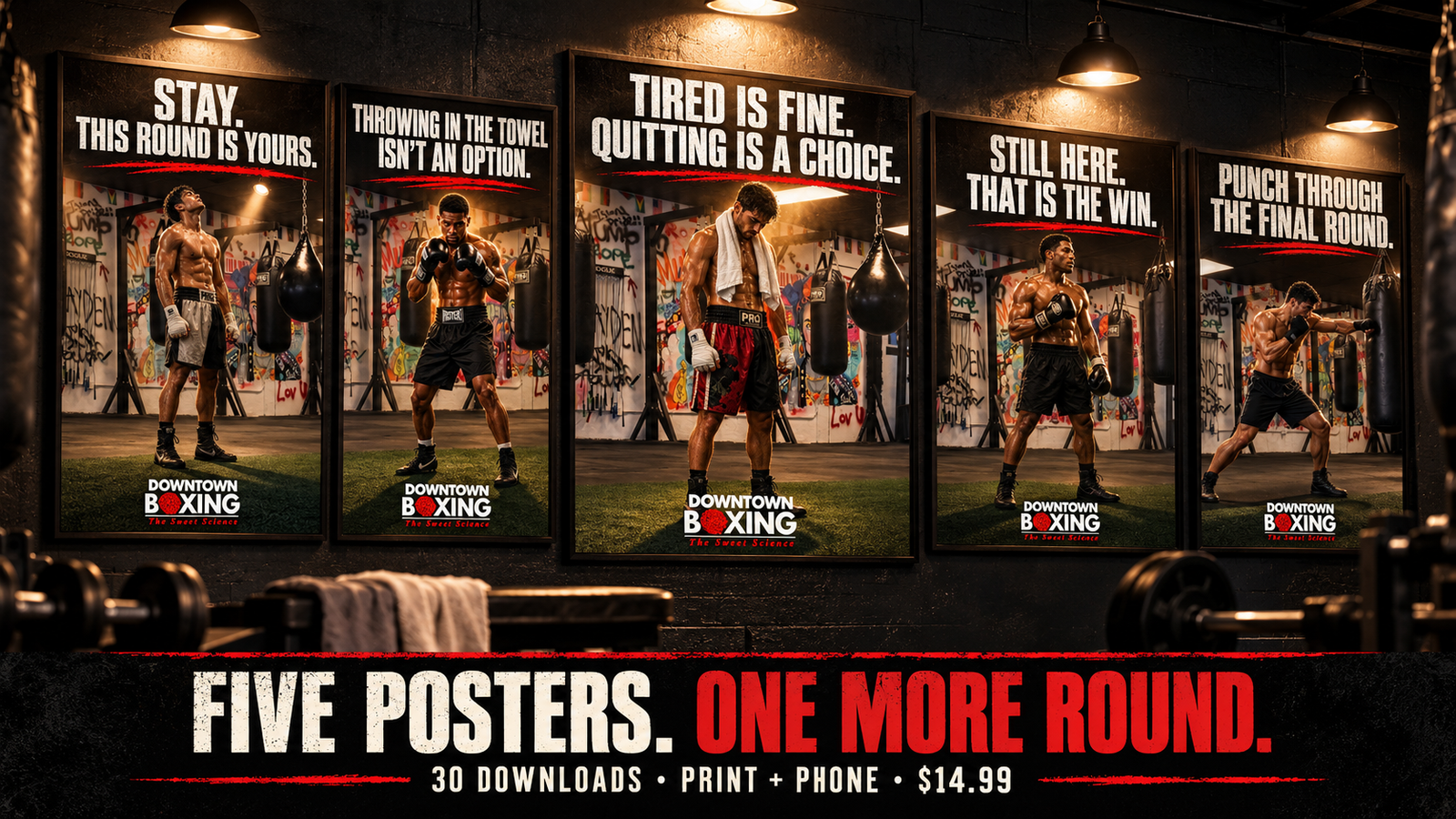
Gear that supports this work
The verified Downtown Boxing Wall Art five-poster bundle is a digital download with six sizes per design. A visible cue can help you remember that preparation begins before the bell.
Disclosure: This is a Downtown Boxing digital product. Motivation can support a routine; it cannot replace food, rest, coaching, or medical guidance.
Walk into the first round already prepared
The bell should not be the first moment you think about energy. A solid lunch, a planned afternoon bridge, regular water, and a simple backup snack can change how the final rounds feel. You may still get tired; training is supposed to ask something from you. The difference is that fatigue arrives on top of preparation instead of on top of an empty day. That gives technique a better chance to survive.
Bring this plan to Downtown Boxing and make it specific. Check the class schedule, choose the session you will attend, and write down when the meal and snack will happen. Then ask the coach to watch one technical cue late in the round. Food cannot fix poor pacing or replace coaching, but it can remove an avoidable obstacle. Eat for the work in front of you, keep the plan ordinary, and let the next clean round—not a sugar rush—be the evidence that it works.
Editorial note: The hero is an original AI-generated image created for this article and reviewed for natural boxing anatomy. Nutrition guidance was checked against the cited sports-nutrition and hydration sources.