
Quick answer: endurance means keeping the shape
Boxing stance endurance is the ability to keep a useful stance while you move, defend, and punch after your breathing gets heavy. It is not a contest to stay frozen or squat lower. A beginner needs to preserve a few simple relationships: the feet remain separated, the knees stay soft, the head stays between the base of support, and both hands return to guard. When those relationships survive the final thirty seconds of a round, technique has somewhere stable to land.
The fastest way to build that quality is to practice short rounds at a pace you can control, then add time or complexity only when your shape remains recognizable. Start with stance holds that include easy steps, progress to shadowboxing with one or two punches, and finish with a brief self-check. If your feet narrow, your rear heel plants heavily, your chest rises, or your hands drift, reduce the pace before adding more conditioning. The goal is not to look fresh. The goal is to stay organized while tired.
The round where the stance begins to leak
The timer shows forty seconds. A boxer who looked balanced at the opening bell now reaches with the front shoulder. The rear foot trails behind each step. Both gloves hover below the cheekbones, and the next combination starts from a square stance. Nothing dramatic happened. Fatigue simply removed the extra attention that had been holding the stance together. This is why stance endurance deserves its own practice instead of being treated as an automatic side effect of hard rounds.
In a beginner class, the coach can often predict the leak before it appears. The athlete rushes to match a faster partner, breathes only after the combination, and uses bigger steps as the legs tire. The correction is rarely “try harder.” A better correction is to simplify the task until the boxer can feel the feet again. One jab, one step, one exhale, and one return to guard can teach more than another frantic minute. Fitness matters, but useful fitness must protect the skill you came to train.
What stance endurance is—and what it is not
Stance endurance combines local muscular endurance, balance, breathing, and decision-making. The calves and thighs help you manage the floor, the trunk keeps the ribs and pelvis from drifting apart, and the upper back supports a relaxed guard. At the same time, the eyes must keep reading the room. No single wall sit or long run recreates all of that. General conditioning builds capacity; boxing rounds teach you how to spend that capacity without losing position.
It is not a demand to hold a deep crouch. Sitting too low can lock the hips, burn the thighs, and make the first step slow. It is not permission to grind through sharp pain, dizziness, or numbness. It is also not an excuse to make every session exhausting. The boxer who can repeat good two-minute rounds will usually learn more than the boxer who survives one wild five-minute effort. Treat fatigue as information. When form changes, identify the first change and adjust one variable—pace, round length, or drill complexity—before continuing.
A structured home-round option
The verified 30 Day Shadow Boxing Manual is a 40-page digital guide with 30 no-equipment sessions. It can help you organize controlled practice between coached classes.
Disclosure: This is a Downtown Boxing digital product. The link is promotional; it does not replace in-person coaching.
Four anchors that should survive fatigue
Use four anchors instead of twenty cues. First, keep a visible lane between the feet; an orthodox boxer should not let the rear foot hide directly behind the lead foot. Second, keep pressure spread through both legs so either foot can begin the next movement. Third, let the knees remain springy rather than collapsing inward or locking straight. Fourth, bring the hands home without squeezing the shoulders toward the ears. These anchors create a stance that can move, not a pose for a photograph.
Check the anchors in the same order every round: feet, pressure, knees, hands. That sequence works because the upper body often tells a lie that the floor exposes. A high guard can look responsible even while the feet have crossed. Conversely, tired hands do not always mean the whole stance failed; the shoulders may only need to relax. A consistent scan helps you correct the real problem. In class, ask the coach to watch one anchor during the last thirty seconds rather than judging everything at once.
Run a simple baseline before you add work
Begin with two rounds of easy shadowboxing. Use two minutes of work and one minute of rest. In round one, move without punching for thirty seconds, add a single jab for sixty seconds, then return to movement only. In round two, use the jab-cross at a conversational pace and finish with thirty seconds of defense-only movement. Record which anchor changes first. Do not count punches. The useful result is the first visible leak and the time when it appears.
Repeat the baseline a week later under similar conditions. Improvement might mean the same form lasts longer, your breathing settles sooner during rest, or you notice the leak without a coach calling it out. It does not require a faster punch count. Film only if the gym permits it and keep the camera far enough away to capture both feet. A short side angle can reveal reaching; a front angle can reveal a narrowing base. Compare one round with one round, not your tiredest clip with someone else’s highlight.
Choose the right training tool
Different tools solve different problems. Easy shadowboxing is best for learning to preserve alignment while making choices. Bag rounds add impact and can expose reaching, but the bag may pull beginners into a square stance. Carries and split-stance strength exercises build general capacity, yet they do not teach distance or guard recovery. Roadwork can support the aerobic system, but it cannot replace boxing footwork. The right plan combines tools while keeping their jobs clear.
For most beginners, start specific and simple. Use controlled shadowboxing twice each week, then add one short strength block on nonconsecutive days. Keep the bag for a day when the goal is obvious, such as returning the rear hand to the cheek after every cross. A tool earns its place when it improves a named behavior. If an exercise only makes you tired, it may still be exercise, but it is not automatically the best answer for stance endurance.
Stance-endurance tools compared
| Tool | Best use | Main watch-out |
|---|---|---|
| Controlled shadowboxing | Foot position, guard recovery, decisions | Rushing without feedback |
| Heavy bag rounds | Impact while keeping range and balance | Reaching or squaring up |
| Strength exercises | General leg and trunk capacity | Confusing fatigue with boxing skill |
| Roadwork | General aerobic support | Skipping boxing-specific movement |
Drill one: guard-and-glide rounds
Set a timer for six intervals of forty seconds with twenty seconds of easy walking between them. Begin in stance and glide one short step in any direction, then stop long enough to feel both feet. Add one jab only after the stop. Exhale with the punch, recover the hand, and move again. The pause is not wasted time; it teaches you to arrive balanced before you spend another action. Keep the steps small enough that the rear foot never has to chase.
During intervals three and four, add a slip after the jab. During five and six, choose between a jab and a jab-cross, but keep the same pace. If the stance narrows, remove the second punch. If the shoulders rise, shake the arms during the walk and restart with a softer grip. The drill should feel almost too easy at first. That restraint lets you accumulate correct repetitions and makes the final interval a test of attention rather than a test of panic.
Drill two: split-stance strength without stiffness
Use a supported split squat to build leg endurance without pretending it is a boxing stance. Stand beside a post or wall, take a comfortable split position, and use one hand for balance. Lower only as far as you can keep the front knee tracking over the middle toes and the torso quiet. Perform six to ten smooth repetitions per side. Stop two or three repetitions before failure. The support lets the legs work while the movement stays clean.
Follow each set with twenty seconds of relaxed boxing movement. Notice whether the feet still glide or whether the legs feel glued to the floor. If they feel heavy, take a longer rest rather than forcing ugly steps. Two sets per side are enough for a beginner starting this work. Add repetitions before adding load, and keep at least a day between demanding lower-body sessions. This exercise builds a general reserve; the short movement reset teaches you to carry that reserve back into boxing.
Drill three: carry posture into a moving guard
A light suitcase carry can teach the trunk to resist side bending while the feet keep moving. Hold a manageable dumbbell or kettlebell at one side, stand tall, and walk for twenty to thirty seconds without leaning away from the weight. The ribs should stay stacked over the pelvis and the free arm should swing naturally. This is a strength exercise, not a boxing walk, so keep the feet parallel during the carry.
Set the weight down carefully, then spend twenty seconds in stance moving forward and back with both hands at guard. Switch carrying sides and repeat. Two or three rounds are enough. Choose a load that lets you breathe normally and walk without gripping the floor with your toes. If your gym does not have weights, carry a small training bag or skip the drill. The lesson is posture under an uneven demand, not loyalty to a particular piece of equipment.
Build one twenty-minute stance-endurance session
Start with three minutes of easy movement: ankle rocks, gentle squats, shoulder circles, and a relaxed walk in stance. Then perform the six guard-and-glide intervals. Rest for two minutes before completing two sets of supported split squats on each side. Finish with three two-minute shadowboxing rounds separated by one minute of rest. Round one uses the jab, round two uses jab-cross plus one exit, and round three is your choice at a pace that preserves all four anchors.
Use the final minute to walk and review. Write down the first anchor that changed and one adjustment for next time. The whole session should take about twenty minutes, and it can replace—not merely pile onto—another conditioning block. Beginners often improve by doing less work with a clearer target. If you already attend several boxing classes, ask a coach where this session fits. More fatigue is not always more adaptation, especially when your weekly schedule already includes bag work, pads, and sparring.
Progress the round without losing the lesson
Change only one variable at a time. You can extend a round from two minutes to two minutes and fifteen seconds, add one extra interval, or allow one more punch choice. Do not increase all three in the same week. A useful progression earns roughly the same stance quality at a slightly greater demand. If the first leak appears much earlier, return to the previous version and collect another week of clean practice.
You can also progress through attention. In week one, call out the feet after every exchange. In week two, check only at the thirty-second marks. In week three, let the round run and review afterward. The physical task stays similar while self-monitoring becomes less intrusive. That matters because boxing cannot be performed as a permanent checklist. The anchors must eventually sit in the background while your eyes and decisions move to the foreground.
How to schedule strength and boxing
Place the most technical boxing work when you are reasonably fresh. If you strength train on the same day, many beginners do better learning the boxing skill first and lifting afterward, unless a coach has planned another order for a specific reason. Keep demanding leg work away from the day when you need your sharpest footwork. Nonconsecutive full-body strength sessions are a practical starting point because they leave recovery space between similar demands.
Look at the whole week, not one perfect workout. A hard job, poor sleep, extra running, and a long boxing class all contribute to the load you carry. The National Strength and Conditioning Association notes that training status, total activity, and recovery should influence frequency. Two focused strength sessions can be enough for a novice. If soreness changes the way you stand or step, reduce the next load instead of rehearsing compensations. Consistency grows from recoverable work.
Read fatigue before it becomes bad practice
Green-light fatigue feels like heavier breathing and warmer legs while the stance remains responsive. Yellow-light fatigue shows up as repeated technical leaks: feet clicking together, the rear hand dropping after every cross, or the head drifting beyond the lead knee. Slow down, shorten the round, or return to a single jab. Red-light signs include sharp pain, dizziness, chest pain, faintness, sudden weakness, or unusual shortness of breath. Stop training and seek appropriate medical help rather than treating those symptoms as a toughness test.
Ordinary muscle effort should settle as you rest. A coach can help distinguish a technical problem from a workload problem, but coaching is not medical diagnosis. If pain persists, symptoms recur, or you have a condition that affects exercise, speak with a qualified health professional. The safe goal is repeatable practice. You cannot build stance endurance by ignoring a signal that removes you from training for weeks.
Your stance-endurance checklist
Before the round, confirm that your shoes are secure, the floor is clear, and you have enough room to move. Choose one cue and one permitted punch pattern. During the round, keep the feet separated, pressure available in both legs, knees soft, chin tucked, and hands returning home. Exhale during punches instead of saving every breath for the end of the combination. At the bell, notice the first leak before judging the entire round.
After the round, ask three questions. Did my stance narrow? Did my pace force me to reach? Could I recover my breathing during the rest? Change one variable based on the answers. Shorten the next round if two anchors failed together. Keep the same work if form stayed sound. Add difficulty only when the current version feels organized. This checklist should make practice simpler, not turn it into an exam.
Print-free round checklist
- Clear the floor and secure your shoes.
- Choose one cue and one punch pattern.
- Keep a visible lane between the feet.
- Return both hands without lifting the shoulders.
- Exhale on punches and recover during the rest.
- Record the first technical leak, not just how tired you felt.
- Progress only one variable next time.
Frequently asked questions
How often should a beginner train stance endurance? Two short, focused sessions each week can fit many beginner schedules, especially when regular classes already provide conditioning. How low should the stance be? Low enough for soft knees and available movement, not so low that the thighs burn immediately or the hips lock. Should you hold your hands up the entire time? Keep a useful guard, but relax the grip and shoulders; tension spends energy without guaranteeing protection.
Will running fix a stance that falls apart? Running may support general aerobic fitness, but stance organization must be practiced in boxing movement. Can you do these drills at home? Yes, if the floor is dry, the space is clear, and you use controlled shadowboxing without striking walls or furniture. When should you add weights? Add load only after the movement is stable and a coach has helped you choose an exercise you can perform safely.
Keep learning and check the evidence
For coached practice in Clearwater, review the class schedule, boxing programs, and membership options. Pair this session with our guides to a beginner boxing cooldown and one-skill-per-round practice.
Sources

Gear that supports this work
The verified Downtown Boxing Wall Art five-poster bundle is a digital download with six sizes per design, including phone wallpaper. Use a visual cue if it helps you arrive ready to do the next clean round.
Disclosure: This is a Downtown Boxing digital product. Motivation supports practice; it does not substitute for programming or coaching.
The bell is not the end of your shape
Boxing asks you to make useful decisions while the body is asking for shortcuts. Stance endurance gives those decisions a floor. Build it with small steps, restrained rounds, simple strength work, and honest readbacks. The win is not finishing exhausted. The win is hearing the final bell with enough balance to step out, bring the hands home, and know exactly what you will improve next.
If you want a coach to watch the first leak instead of guessing alone, review the Downtown Boxing schedule and choose a class that matches your experience. Bring one cue from this article, tell the coach when your stance usually changes, and let the next round become a clean experiment.
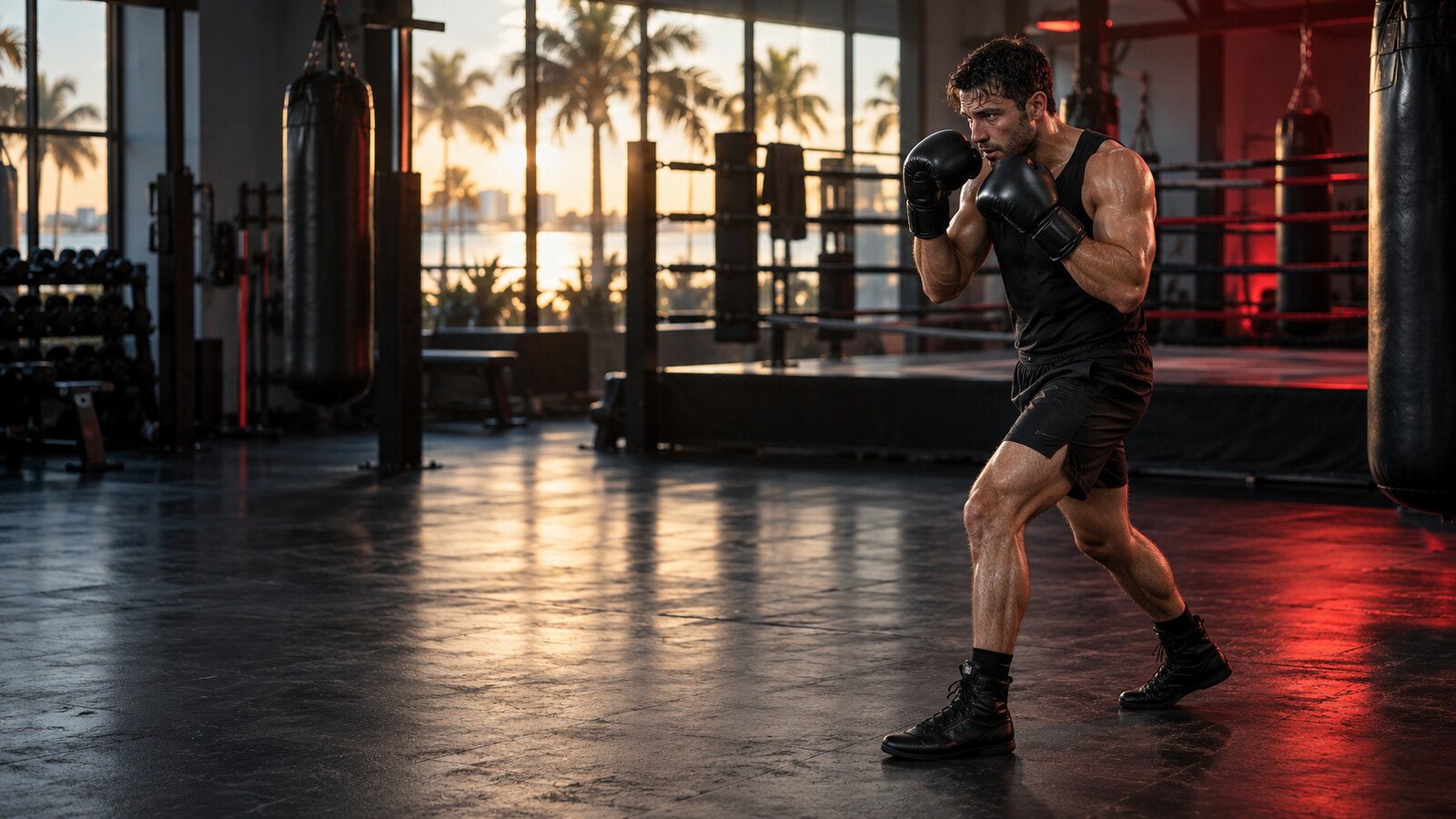
Editorial note: The hero image is an original AI-generated illustration. Training guidance was reviewed against the cited boxing-demand research and general strength-programming guidance.