

Quick answer: protect the hours after training
Better boxing sleep begins before you reach the pillow. Finish the session under control, lower the room intensity instead of adding surprise conditioning, eat and drink enough to feel settled, write down tomorrow’s plan, and give yourself a repeatable path from gym energy to bedtime. The goal is not a perfect ritual. The goal is to remove the small decisions that keep a tired boxer alert long after the gloves come off.
Most adults ages 18 to 60 need at least seven hours of sleep, according to the CDC, while individual needs vary. A beginner should treat that time as part of training, not as whatever remains after work, scrolling, and late errands. Choose a realistic wake time, count backward, and protect a useful sleep window. If sleep trouble is frequent, severe, or affecting daily life, speak with a qualified health professional. A boxing routine can support healthy habits; it cannot diagnose or treat a sleep disorder.
Recovery starts before you leave the gym
A hard final round can leave the body switched on. The mistake is trying to erase that feeling with one dramatic stretch or a freezing shower. Begin with a short transition. Walk for two or three minutes, let the breathing return toward normal, loosen the hands, and notice whether any pain feels different from ordinary effort. Finish equipment care calmly. Rushing from the bag to the car keeps the session emotionally unfinished and makes it easy to carry the whole workout into the evening.
Coach Ramon’s rule is simple: the last five minutes should look like a landing, not another takeoff. Use easy footwork, relaxed shoulder circles, and unforced breathing. Do not hold long painful stretches or copy recovery challenges from social media. If you feel chest pain, faintness, confusion, unusual shortness of breath, or symptoms after a head impact, stop and follow appropriate medical and gym procedures. Sleep is important, but it is never the first response to an urgent warning sign.
Build a thirty-minute bridge from gloves to home
The first thirty minutes after class do not need to be complicated. Pack your wraps so they can dry, change out of soaked clothing, drink according to thirst and your normal plan, and decide what the next meal will be before hunger becomes a drive-through decision. If the session ended late, use softer light and quieter music on the ride home. This is not because one bright light ruins recovery; it is because repeated cues help the evening move in one direction.
Try the same order for one week: cool down, pack, drink, travel, eat, shower, prepare tomorrow, then reduce stimulation. The sequence becomes a signal that training is complete. Link this routine with the post-boxing dinner guide when you need practical food ideas. Keep the routine flexible for family, work, and class times. Consistency should reduce stress, not create guilt when life requires a change.
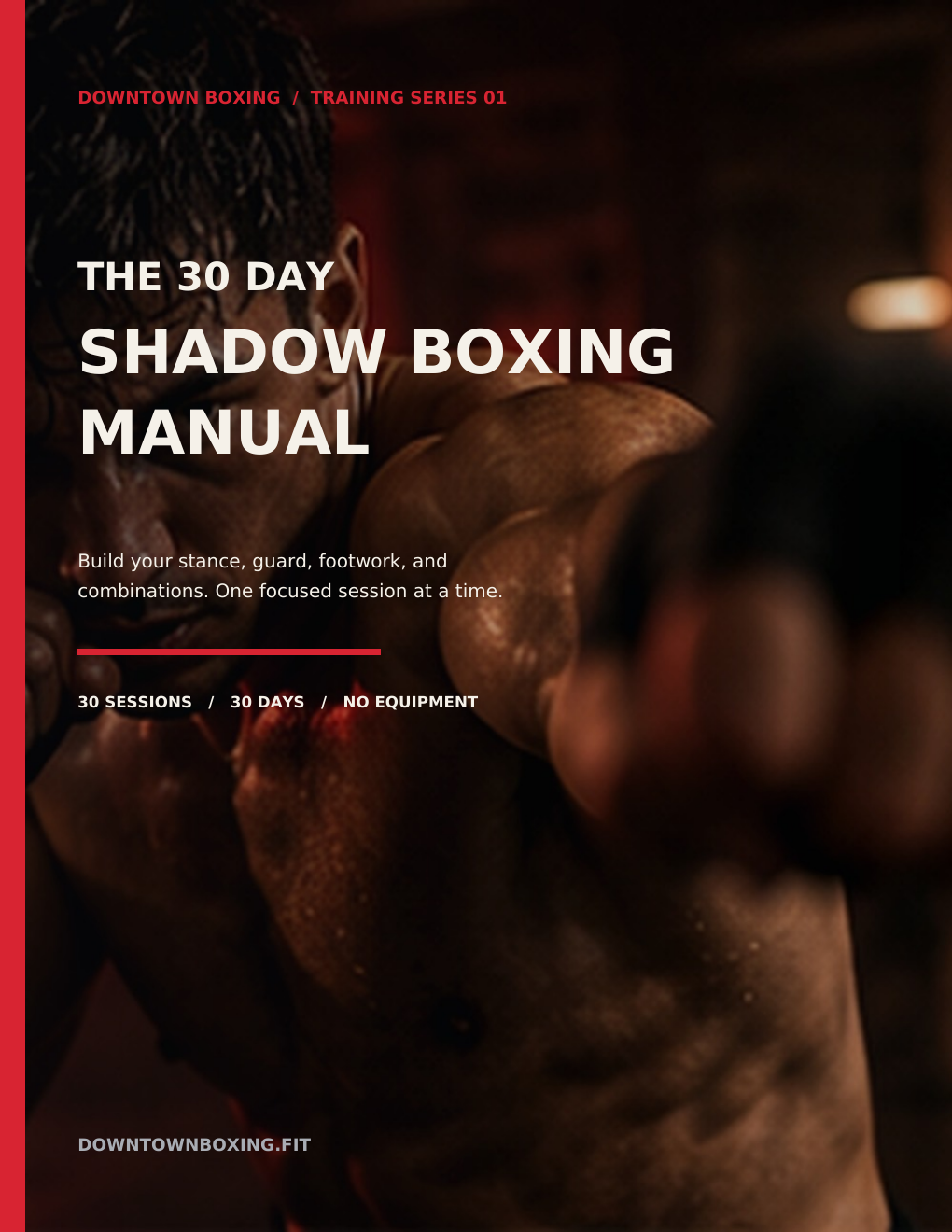
A plan for purposeful practice days
The verified 30 Day Shadow Boxing Manual provides structured no-equipment sessions. Use it to organize practice, never to replace sleep, medical guidance, or your coach’s workload decisions.
Disclosure: This is a Downtown Boxing digital product. The promotional link supports the site.
Drill one: the three-step shutdown
Practice this on an ordinary training night. Step one is a two-minute walk after the final technical round. Keep the feet under the hips, let the arms swing naturally, and avoid turning it into extra conditioning. Step two is a one-minute equipment check: gloves open, wraps separated, water bottle packed, keys and phone located. Step three is a thirty-second plan spoken or written in plain words: “Dinner, shower, bag ready, lights out at eleven.”
Repeat the drill after three sessions and score only completion. Did you leave the gym without adding random work? Did you know the next meal? Did you set a bedtime target before the evening filled up? The drill trains a transition, not athletic ability. If the plan repeatedly fails, change the plan. A boxer who arrives home at 9:30 cannot follow the same routine as someone who trains at noon. Build around the schedule you actually live, then use the Downtown Boxing schedule to choose class times that fit recovery as well as motivation.
Eat enough without turning bedtime into a food test
After boxing, beginners often swing between two extremes: skipping food because it is late or eating a very large meal because they feel empty. A better starting point is a familiar meal that includes protein, carbohydrate, and foods you tolerate well. Portion size depends on the person, the training load, the hour, and medical or nutrition needs. The purpose is to support recovery and settle hunger, not to chase a magic sleep food.
Keep late meals simple when rich, spicy, or very large meals make you uncomfortable. The CDC advises avoiding large meals and alcohol before bedtime. Alcohol may feel relaxing, but NHLBI notes that it can lead to lighter sleep and more waking during the night. Do not use alcohol as a recovery tool. If reflux, diabetes, food allergies, medication timing, or another condition affects evening eating, follow professional guidance. The boxing coach can help organize practice; a registered dietitian or clinician handles individualized medical nutrition decisions.
Choose a caffeine cutoff you can repeat
Caffeine can hide fatigue without replacing sleep. The most useful beginner question is not “What is the perfect cutoff?” but “When does caffeine seem to delay my sleep?” Start by recording the time and amount of coffee, energy drinks, pre-workout, tea, or other caffeinated products for seven days. NHLBI recommends avoiding caffeine close to bedtime, and the CDC advises avoiding it in the afternoon or evening. Sensitivity and schedules differ, so observe your own pattern without pretending that tiredness is a character flaw.
If you train at night, do not automatically add stimulant products because the class feels demanding. Ask whether food, hydration, pacing, or an earlier bedtime is the larger issue. Never mix products casually or exceed label directions. People with heart conditions, anxiety concerns, pregnancy, medication interactions, or other health considerations should ask a qualified professional. A cutoff is useful only when it is realistic. Move it earlier in small steps, keep the rest of the routine stable, and judge the pattern across several nights rather than one unusual evening.
Make the bedroom do one clear job
The bedroom does not need to look like a wellness advertisement. It needs to make sleep easier. The CDC recommends a quiet, relaxing room kept at a cool temperature. NHLBI also advises a cool, quiet, dark sleep environment. Start with the obvious friction: bright indicator lights, a television left on, a hot room, notifications on the nightstand, or gym gear covering the bed. Fix one thing at a time and keep the change if it helps.
Lay out tomorrow’s clothes and boxing bag outside the final sleep period so the mind is not solving logistics in bed. If street noise is unavoidable, use a steady solution that is safe for your situation. Keep the room dark enough for comfort without creating trip hazards. Parents, shift workers, and shared households may need a practical compromise rather than silence. The standard is not perfection. The standard is whether the room helps your body understand that the active part of the day is over.
Use screens on purpose, not by momentum
A phone can turn a ten-minute check into an hour of boxing clips, comments, and messages. The CDC suggests turning off electronic devices at least thirty minutes before bedtime, while NHLBI advises avoiding bright artificial light near bedtime. Treat that guidance as a planning cue. Set an alarm that means “finish the day,” charge the phone away from the pillow when practical, and choose the last necessary task before the timer starts.
If you use the phone for an alarm, music, family communication, or work, create a narrow lane instead of demanding total removal. Silence nonessential notifications, lower the brightness, and avoid using the bed as a film-study station. Save technical review for a planned daytime block. Watching the same missed combination at midnight rarely teaches more; it usually keeps the round emotionally alive. Write one coaching question for tomorrow and stop. The between-round focus guide uses the same principle: select one useful cue, then let the rest wait.
Late class and early class need different plans
An early class asks you to protect bedtime before training day. A late class asks you to shorten the distance between training and sleep without rushing important needs. For an early session, pack the bag and choose breakfast the night before. Keep the wake time realistic and avoid borrowing sleep for a workout you cannot safely support. For a late session, finish with controlled work, know the post-training meal in advance, and remove errands that can happen tomorrow.
Do not punish yourself for feeling alert after a demanding evening class. The body has just practiced speed, force, decisions, and effort. Use the same bridge each time and notice how long settling normally takes. If late training repeatedly causes major sleep problems, consider a different class time or discuss the pattern with a healthcare professional. Downtown Boxing offers different training options; review the programs page and choose a schedule that supports learning, work, family, and recovery together.
Compare the routines that help and hurt
| After-training choice | Common short-term feeling | Better next step |
|---|---|---|
| Extra conditioning without a plan | Productive but overstimulated | Finish the programmed session and cool down |
| Scrolling boxing clips in bed | Distracted from fatigue | Write one question and review it tomorrow |
| Skipping food despite strong hunger | Fast and disciplined | Use a familiar balanced meal |
| Large late meal or alcohol | Temporarily relaxed | Plan a tolerable meal and nonalcoholic routine |
| Same simple shutdown | Less exciting | Repeat it long enough to judge the pattern |
Recovery habits work through repetition, not drama. The boring option is often the useful option: finish on time, eat something familiar, dim the room, and go to bed when planned. You can still enjoy training and study the sport. Put those activities in a time slot where they do not compete with sleep. The comparison is not about moralizing one late night. It is about noticing which choices make tomorrow’s stance, attention, and patience easier to coach.
Drill two: run a seven-night sleep log
Use a notebook or the free NHLBI sleep diary. Record bedtime, estimated time you fell asleep, wake time, awakenings you remember, caffeine timing, training time, and how alert you felt the next day. Keep the entry short enough to complete in two minutes. Do not turn the log into a competition for perfect numbers. Its job is to reveal patterns, such as late caffeine on class nights or a large weekend schedule shift.
After seven nights, circle one change you can test for the next week. Examples include moving the final coffee earlier, packing the bag before dinner, or ending screen review thirty minutes sooner. Keep everything else mostly stable. Then compare how often you followed the plan and how you felt during warm-up. A diary cannot diagnose insomnia, sleep apnea, or another condition. Share persistent concerns with a qualified professional. The useful coaching question is, “What repeatable choice gives tomorrow’s session a fair chance?”
Do not chase soreness with more work
A beginner may mistake soreness for proof that another session is needed. Sleep planning works best beside sensible training load. If the legs feel heavy and technique is falling apart, adding a midnight bodyweight circuit does not make the original practice better. Follow the program, communicate unusual pain, and let the coach see the whole week rather than one motivated moment. Read the beginner rest-day guide for a broader way to keep rhythm without turning recovery into hidden training.
Ordinary muscle soreness can be uncomfortable, but sharp pain, swelling, loss of function, symptoms that worsen, or concern about injury deserves appropriate assessment. Do not use sleep, stretching, massage tools, or supplements to cover a problem that needs evaluation. Recovery is not passive laziness. It is the decision to match the next action to the body you actually have. Some nights that means a normal routine. Other nights it means stopping, reporting a symptom, and getting qualified help.
Naps and weekends should support the main plan
A short nap may help some people, but late or long naps can make bedtime harder for others. NHLBI advises avoiding naps, especially in the afternoon, when insomnia is a concern. If you nap, keep a note of when and how long, then watch whether nighttime sleep changes. Do not use naps to make a chronically short sleep schedule feel acceptable. The main target is enough regular nighttime sleep for your needs.
Weekends can create the same problem when bedtime and wake time move by several hours. Both CDC and NHLBI recommend a consistent schedule, including weekends. Perfect sameness is not required, but a huge swing can make Monday feel like travel across time zones. Choose a wake-time range you can usually keep. If your work schedule rotates, focus on the parts you can control: a dark quiet room, a predictable wind-down, caffeine timing, and enough time in bed. Shift workers with persistent difficulties should seek professional guidance.
Know when sleep needs more than a routine
Talk with a healthcare professional when sleep problems are frequent, last for weeks, or interfere with mood, work, driving, memory, or training. Loud snoring, gasping, witnessed pauses in breathing, morning headaches, severe daytime sleepiness, restless sensations, or falling asleep in unsafe situations should not be dismissed as normal boxer fatigue. A routine is a support tool, not a diagnosis. Do not start sleep medicines or supplements casually, especially when you use other medications or have health conditions.
Protect other people as well as yourself. Do not drive when dangerously sleepy. If a boxer is unusually confused, poorly coordinated, or hard to wake after a head impact, follow emergency and concussion procedures rather than assuming the person only needs rest. Coaches should document what they observed and avoid medical promises. The safest culture is one where athletes can report fatigue without being mocked. Honest information lets the training plan change before a preventable problem grows.
Your post-boxing sleep checklist
- Finish the planned session instead of adding random conditioning.
- Walk easily and let breathing settle.
- Report unusual pain, dizziness, confusion, or breathing problems.
- Open gloves and wraps so equipment can dry.
- Choose a familiar post-training meal and drink according to your plan.
- Set tomorrow’s bag, clothes, and first task before bed.
- Keep caffeine away from the late part of your day when it affects sleep.
- Use a cool, quiet, dark room as practical.
- End nonessential screen use before bedtime.
- Protect enough time for your sleep needs.
- Record patterns for one week before changing everything.
- Seek professional help for persistent or concerning symptoms.
Compress the checklist into four words: finish, settle, prepare, sleep. Say them after the final bell. Finish the programmed work. Settle the body and the room. Prepare food, equipment, and tomorrow’s question. Sleep inside a window you protected on purpose. This routine will not make every morning easy, but it gives recovery a dependable place in your boxing week.
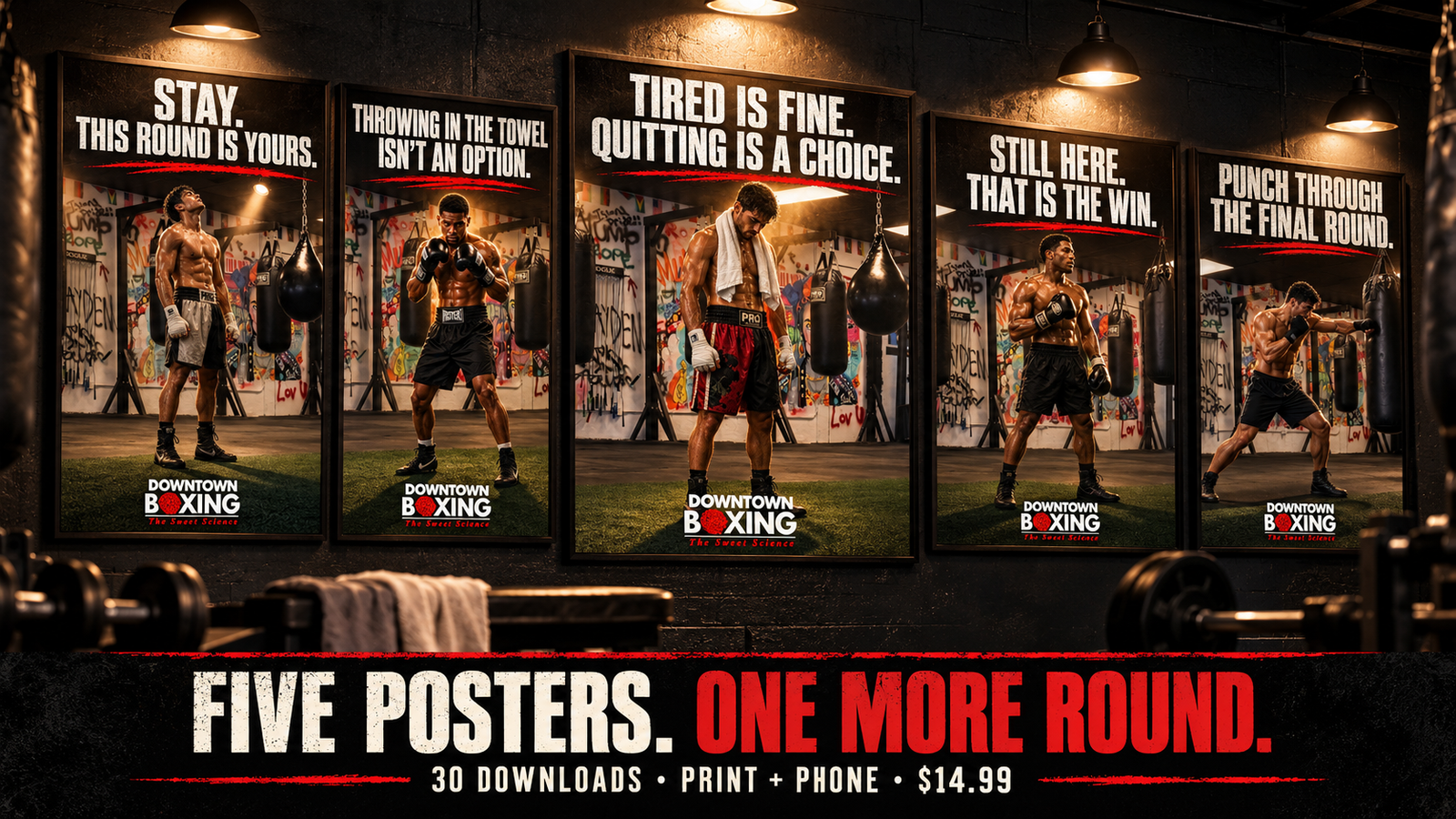
Gear that supports the routine
The verified Downtown Boxing Wall Art five-poster bundle is a digital download for a home training area. It does not improve sleep by itself; the value is a clear, organized space that keeps boxing reminders out of the bedroom.
Disclosure: This is a Downtown Boxing digital product. The promotional link supports the site.
Frequently asked questions and sources
How many hours should a boxer sleep? The CDC says adults ages 18 to 60 should get seven or more hours, while needs vary. Teenagers generally need more. Should I use a sleep supplement? Ask a qualified professional who knows your health and medications; do not assume “natural” means risk-free. What if night class keeps me awake? Keep a consistent transition, reduce late stimulation, review caffeine timing, and consider another class time if the pattern continues.
Sources: CDC: About Sleep; NHLBI: Healthy Sleep Habits; NHLBI Sleep Diary; and Australian Institute of Sport: Sleep. These sources support general sleep guidance, not individualized treatment or a guarantee of boxing performance. To build a coached routine in Clearwater, contact Downtown Boxing and choose training hours you can recover from consistently.