
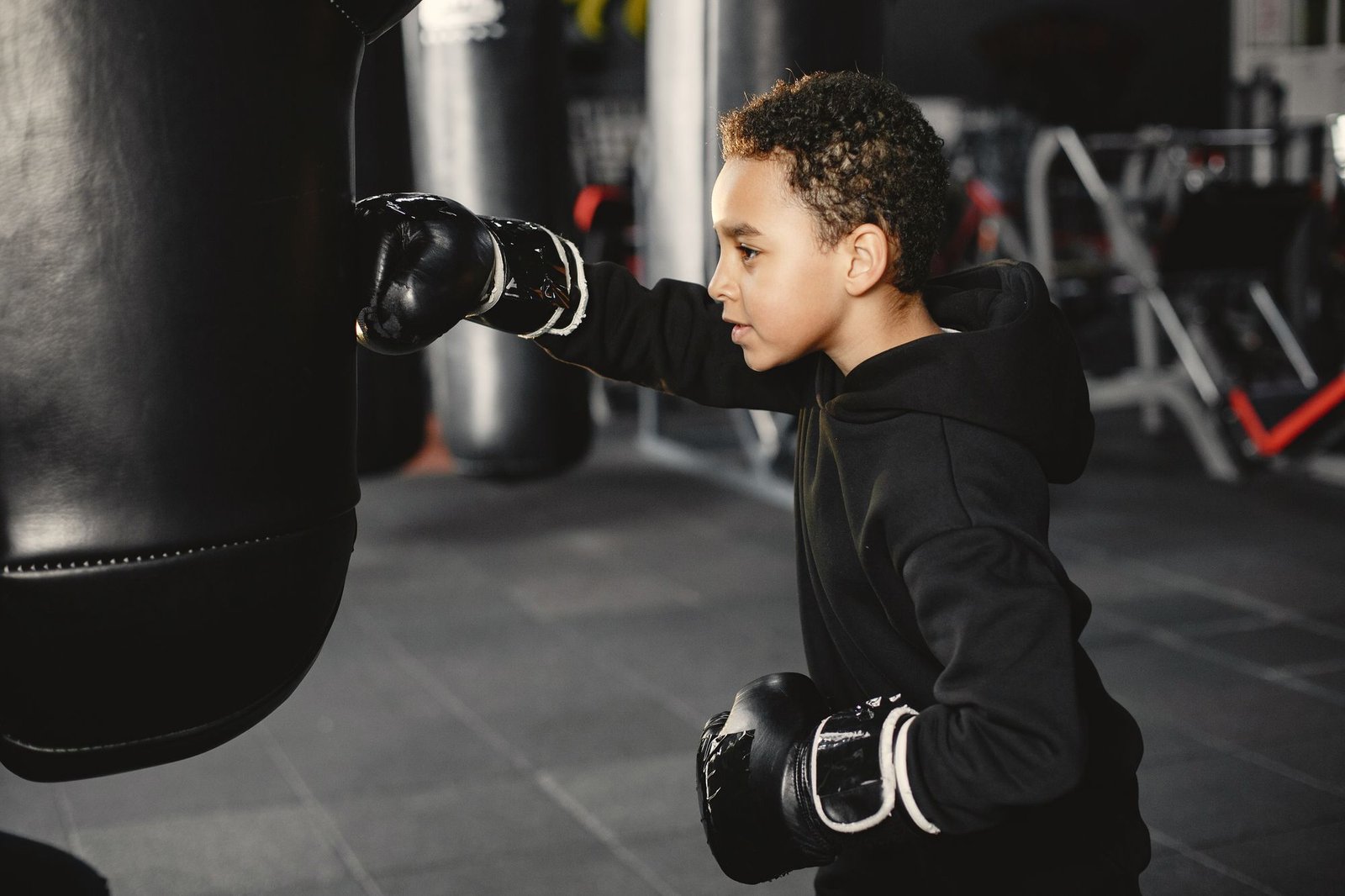
Confidence begins before the first punch
A young student stands near the edge of the mat, holding gloves while the class gathers.
Parents often look for youth boxing because they hope their child will become stronger, more focused, or more willing to try difficult things. Those are understandable hopes, but confidence does not appear on command. A child may feel uncertain walking into a room with hanging bags, unfamiliar faces, and a coach calling instructions. The first useful step is to make the situation manageable. Arrive early, let the young boxer meet the instructor, and find out how the beginner session works before the timer starts.
A parent can help by staying calm during those first minutes. Explain where you will wait and when you will see each other again. Avoid telling a nervous child there is nothing to worry about. Instead, name the next action. You can meet the coach, put on gloves, and try the warm-up. A small and achievable plan gives the child something concrete to do. The aim of the first class is not to display toughness. It is to learn how to participate safely.
The coach should explain class expectations, partner rules, and the difference between technique practice and contact. Parents can ask questions before training begins, especially about age groups, supervision, protective equipment, and what happens when a child is uncomfortable. Clear answers help a family decide whether the environment fits. A youngster who feels prepared is more willing to concentrate on the coach rather than constantly checking the doorway for reassurance.
Let the coach lead the lesson
The instructor raises a mitt to demonstrate a jab as a parent watches from the viewing area.
A parent watching youth boxing sees every missed jab and awkward step. It is tempting to call out a correction from the side. Resist it. The coach may be teaching only one detail in that round, such as bringing the fist back to guard. A parent shouting about the feet, chin, or speed adds competing instructions. The child then has to decide whom to obey instead of learning the movement. During class, let the person responsible for the training give technical cues.
Support from a viewing area is different from coaching. A smile, a nod, or quiet attention is enough. If the gym has rules about where parents sit or stand, follow them. Do not walk onto the mat to adjust your child’s gloves unless staff invites you. Coaches need to see the entire group and keep movement lanes clear. A child also benefits from the chance to ask questions directly, receive an answer, and attempt the next repetition without a parent speaking for them.
After class, ask the coach about the learning goal rather than listing every mistake you noticed. One question might be, what should my child practice before the next session? If you hear a cue you do not understand, seek clarification away from active training. This keeps parent involvement useful and leaves room for the instructor to teach without the lesson becoming a competition between adults.
Praise effort you can describe
A beginner tries the same simple footwork step for the third time.
Young boxers notice what adults praise. If every compliment is about being the best, hitting hardest, or finishing ahead of someone else, confidence begins to depend on outcomes outside a child’s control. Look instead for choices the child made. You went back and tried the step again, you listened to the coach, or you asked for help when the drill was confusing. These comments describe effort and behavior without pretending every attempt was perfect.
Confidence grows through repeated experiences of learning something difficult and finding a way forward. A child who returns to guard after forgetting once has made progress even if the punch still looks awkward. Parents do not need to clap after every repetition. A specific comment on the ride home may mean more than loud praise during the class. Give the child space to tell you which moment mattered before sharing your own observation.
Try not to turn praise into a hidden demand. Saying you worked hard today is different from saying you always work harder than everybody else. The second statement places a label the child may feel pressure to defend. Look for honest, small evidence of change over several weeks. Keeping a simple practice note about attendance, willingness to ask questions, or comfort with a new drill often reveals progress that a single class cannot show.
Make room for an uncomfortable beginning
The class begins a warm-up while one student needs another minute to join.
A young athlete may hesitate because the setting is loud, the gloves feel unfamiliar, or the group already knows one another. That hesitation does not prove the child lacks discipline. Ask what feels difficult. The answer might be a fear of getting hit, worry about looking silly, or confusion about the rules. Each concern suggests a different response. A coach can demonstrate a noncontact drill, explain the boundaries of partner work, or allow the student to watch the first repetition.
Parents should not promise there will never be a difficult moment. They can promise to listen, ask reasonable questions, and choose training that follows agreed safety rules. Some children settle into a group after one warm-up. Others need several visits before they speak freely. Measure readiness by participation and understanding, not by whether the child appears fearless. A student who asks whether a drill includes contact is showing judgment.
If the child seems overwhelmed, discuss a smaller step with the coach instead of forcing the entire session. Shadowboxing beside the group or practicing a stance at a quiet edge may be enough for a first attempt if staff agrees. Returning on another day can be part of a sensible plan. The goal is to build willingness over time, not to make the child endure confusion for the sake of an adult’s schedule.
Keep youth boxing rules clear
Two students wait for a signal before beginning a movement drill.
Youth boxing programs differ in whether they offer fitness work, skill instruction, controlled partner practice, or competition preparation. Parents need to know which activities a class includes. Ask directly whether children will make contact, how partners are matched, and who decides when an athlete is ready for a more demanding drill. Never assume a beginner class involves sparring, and never assume all youth boxing programs use identical policies. The coach should explain the specific session you are considering.
Protective equipment has a role, but it is not permission for uncontrolled contact. Gloves, wraps, and other gear need to fit and be used according to the program’s rules. Technique drills should emphasize balance, hand position, and controlled movement. If a child reports pain, dizziness, headache, or confusion after an impact, stop the activity and seek appropriate assessment rather than encouraging another round. Safety concerns deserve prompt attention from adults.
A child should know how to say stop and expect the signal to be respected. Practice a simple sentence outside class, such as I need a break or I do not understand this drill. Parents can reinforce the right to ask questions without making the child feel disobedient. In a safe learning culture, students understand the task before they begin and know what to do when something goes wrong.
Let the child own small decisions
A young boxer chooses a spot in line and checks the coach’s demonstration.
Parents often handle schedules, payments, travel, and equipment for their children. Boxing class gives the child a chance to manage a few tasks personally. Encourage them to greet the coach, carry their water, place gloves where instructed, and remember one practice cue. These responsibilities are small enough to feel achievable and meaningful enough to create ownership. A parent who answers every question for the child accidentally removes chances to practice speaking up.
Before class, ask what skill the young athlete wants to understand today. The answer might be the jab, the stance, or how to move around a heavy bag. Keep the goal simple. After class, let the child explain what was practiced before you offer an interpretation. You may discover that the drill you thought looked ordinary was the moment they felt most proud. Their description gives you insight that the view from the sidelines cannot provide.
Do not make progress contingent on purchasing more equipment or registering for competitions. First, find out whether the child enjoys the routine and wants to return. A sense of ownership grows when children have a voice in reasonable decisions. Parents still set safety rules and schedules, but the child’s motivation deserves attention. Boxing becomes more sustainable when the athlete is participating by choice rather than trying to fulfill somebody else’s identity.
Respond to mistakes without turning them into a verdict
A missed combination ends and the young boxer resets their stance.
Mistakes happen constantly in a learning gym. Young students forget combinations, step with the wrong foot, drop a glove, and misunderstand a call. A parent who analyzes every error on the ride home can make a class feel like an exam. Start by asking what the child thought was difficult and what the coach suggested. If they do not want to review every detail, respect that preference. A meal and ordinary conversation may be a better follow-up than a second lesson.
Separate the movement from the person. You lost balance after the second jab is an observation; you are not a natural boxer is a judgment. A specific observation opens the door to practice. A permanent label closes it. When a child struggles, encourage one correction and another attempt rather than replaying the whole mistake. Let the coach choose the technical cue so your support remains consistent with the class.
Be careful with comparisons to siblings or classmates. Two children may have different coordination, energy, or comfort with a group. Progress is not a race. A child who can now complete a warm-up without leaving the floor has made a meaningful change even if another student throws a faster combination. Build the conversation around the learner’s own earlier attempts and what comes next.
Create a home routine without turning home into the gym
A child has a few minutes after school and enough floor space to practice a stance.
Extra practice can help, but children also need recovery and time away from organized instruction. Ask the coach whether a short noncontact activity is appropriate. Five minutes of stance, balanced steps, or returning the jab to guard may be more useful than a long unplanned workout. Keep the practice area clear of furniture and avoid punches toward people, pets, or fragile objects. Parents should supervise safety without inventing advanced drills.
Let the child decide when to stop within the agreed routine. If they are tired, upset, or no longer concentrating, pushing for another series may turn a pleasant activity into an argument. Technical practice works best when attention is available. Treat a missed home session as information about the family’s schedule, not as evidence of weak character. A consistent class routine already provides structured repetition.
Do not compare home videos with competition highlights or ask the child to copy dangerous moves from social media. A professional boxer has years of instruction, while a beginner may still be organizing basic footwork. Stay with the coach’s assigned skills. If the child wants feedback, ask them to tell you the cue rather than demonstrating something you are not qualified to teach. Support the training plan without becoming a second instructor.
Help a child handle nerves around peers
Several students line up for partner work and one looks uncertain about being watched.
Social confidence is one reason families explore youth sports, but the group can also make early practice feel exposed. A child may worry about failing in front of classmates or being matched with someone more experienced. Ask the coach how partner assignments are made and how beginners are welcomed. Small groups, clear roles, and predictable routines help children understand what participation will look like. Do not insist that a shy child perform an extra demonstration for visiting relatives.
Encourage courtesy toward training partners. Say hello, listen to instructions, use the agreed pace, and thank the partner after the drill. These habits help children feel part of a team even in a sport where much practice is individual. If another child is struggling, discourage jokes or public criticism. Respectful behavior contributes to an environment where your own child is less afraid of making a mistake.
When conflict appears, get the facts before deciding who was right. Let staff address behavior occurring in class and listen to your child’s account afterward. Teach direct language such as please stop or I need the coach. This is not about making children settle unsafe situations themselves. It is about helping them identify problems and seek support. Confidence includes knowing when and how to ask an adult for help.
Understand what progress looks like over weeks
A coach recognizes that a student returns to guard more consistently than last month.
Progress in beginner boxing often starts with coordination rather than punching power. A child remembers which foot leads, steps without crossing the feet, or follows a three-part instruction that felt impossible the first day. These changes may not look dramatic from a viewing area, but they show developing familiarity. Ask the coach about a manageable skill goal and revisit it after several sessions. Avoid demanding a new achievement every week.
Keep expectations flexible around growth, school demands, sleep, and other activities. Children have days when movement feels effortless and days when attention is scattered. One rough practice does not erase earlier learning. Encourage attendance when appropriate while remaining open to fatigue, illness, or concerns the child raises. A sustainable routine matters more than an unbroken streak of intense classes.
Confidence also appears away from the heavy bag. A student might introduce themselves to a new member, ask a clear question, or recover calmly after a missed combination. These moments are worth noticing, but avoid claiming boxing alone caused every positive change. Family, school, friendships, and natural development all matter. The useful observation is that boxing provides structured opportunities to practice patience, focus, and persistence.
Talk to the coach at the right time
The bell ends the session and families wait while athletes put equipment away.
Parents should have access to clear information about the program. Ask about class goals, contact policies, age groups, supervision, and how progress is discussed. Choose a time before or after class, not while the coach is supervising punches or partner movements. A useful question is specific. My child seemed confused during the partner drill. What was the objective, and what should we review before next week? The answer will be more helpful than an argument over a single missed action.
Bring concerns about safety or behavior to staff promptly. Do not try to investigate during a live exercise by entering the floor or confronting another child. If your child reports unwanted contact, persistent fear, or feeling unsafe, take that seriously and seek a clear explanation before returning to the same activity. Parents protect boundaries; coaches direct the instruction. Those roles complement each other when adults communicate calmly.
Ask what the coach wants from parents during a session. Some gyms invite quiet observation. Others limit access to the training floor to help students focus. Know the location for pickup, the procedure for changing classes, and the person to contact with questions. The clearer these arrangements are, the less attention the young boxer must spend managing the adults around the lesson.
The ride home is part of the experience
A child leaves class carrying gloves and thinks about the round that went best.
The first question after class sets a tone. Did you enjoy any part of that session, or what did you learn today, opens a conversation. Why did you keep dropping your guard puts the child on defense before they have even put the gloves away. Listen to their answer. They may want to describe a friend, a footwork game, or the first time a combination made sense. Those details tell you what is making the experience meaningful.
Celebrate the decision to practice, not only visible results. If the class was difficult, acknowledge the experience and ask what would help next time. A smaller drill, different class time, or conversation with the coach might solve a problem. If the child says they no longer want to attend, find out why before offering rewards or threats. There is a difference between ordinary nerves and an environment that does not fit the young athlete.
Parents support youth boxing best by creating a dependable setting around it. Provide transport, respect the instructor’s role, help with basic preparation, and remain attentive to safety and enjoyment. Give the child the chance to speak, make mistakes, and practice again. At Downtown Boxing in Clearwater, a family considering youth instruction should begin with a conversation about the class structure and the child’s readiness. Confidence is not something a parent shouts into existence. It develops through choices and learning experiences the child gradually owns.