
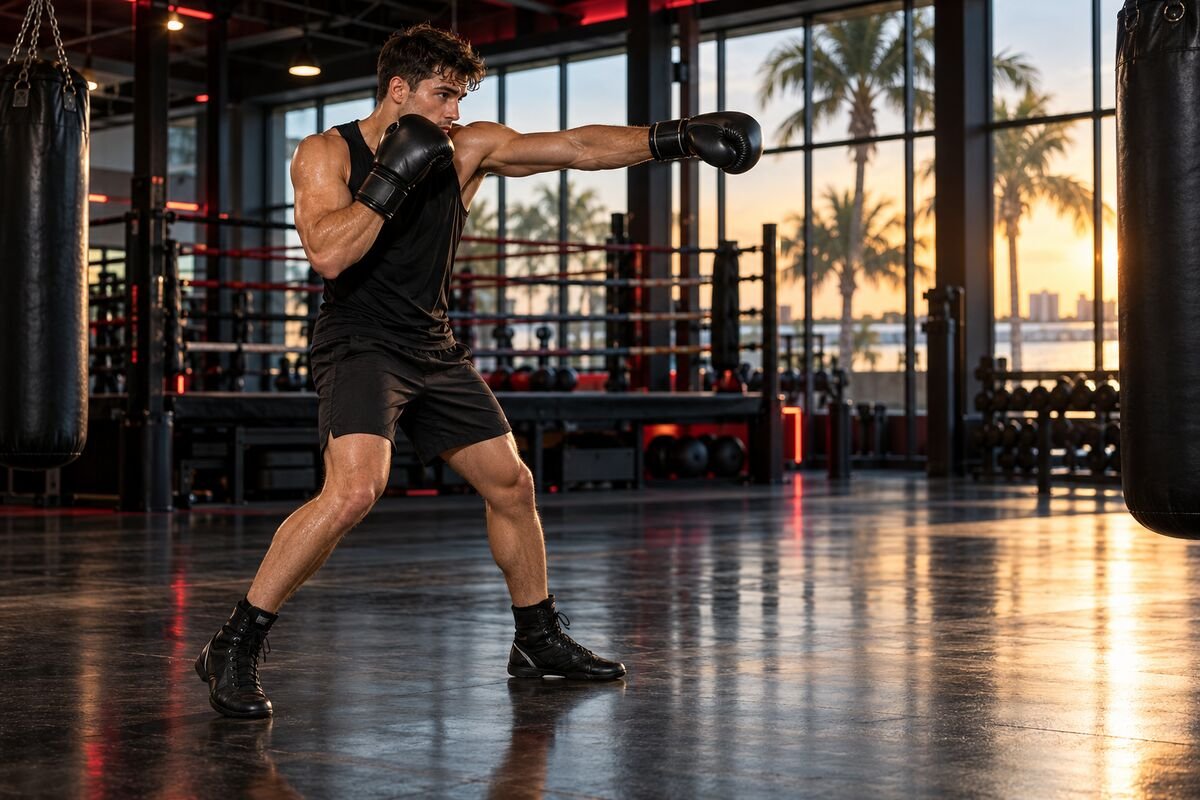
Balance Comes Before Faster Hands
Youth boxers often want to punch faster as soon as the gloves go on. Coaches usually see a different starting point. The feet need to hold a stance, move without crossing, and return the body to a position where the next choice is possible. Balance is not standing still. It is the ability to move, punch, defend, and stop without falling into the target or needing several steps to recover.
A young athlete who learns balance early can practice every other skill with more control. The jab reaches without a lunge. The guard returns without the chest tipping forward. A step back creates space without pulling the feet together. These details reduce confusion because the boxer knows where home is after every action. Speed then grows from organized movement instead of rushed effort.
Build a Stance the Boxer Can Find Again
Start with a stance that feels athletic rather than dramatic. In an orthodox stance, the left foot leads and the right foot sits behind. The feet are separated enough to create a base, but not so wide that stepping becomes difficult. Knees stay soft. The head remains between the feet. The rear heel can lift naturally, while the lead foot stays ready to push or receive weight.
Ask the athlete to look forward, lift both hands to guard, and breathe normally. Then have the boxer step out of stance and rebuild it without looking down. This simple reset shows whether the position is understood or copied. Use short corrections. Move the rear foot back. Soften the knees. Keep the chin down. One cue gives the athlete a clear job and lets the coach see whether the change holds.
Use the Floor as the First Coach
The floor gives feedback before a punch lands. A shoe that squeaks through a long turn, a heel that floats without control, or a foot that crosses the center line shows where balance is leaving. Begin without punches. Take one small step forward, stop, and check the space between the feet. Step back to the starting point. Repeat to the left and right while the stance keeps its width.
Every step uses a lead foot and a following foot. Moving forward, the front foot starts and the rear foot follows. Moving back, the rear foot starts and the front foot follows. Moving left in an orthodox stance, the left foot starts. Moving right, the right foot starts. The second foot restores the base. The feet should not click together, cross, or spread farther with every repetition.
Practice the Step and Return
Mark a start line with a floor seam or a removable marker approved by the gym. The boxer begins in stance, takes one small step forward, pauses, and returns. The goal is not distance. The goal is to land in the same shape. Both hands stay near the face. The eyes stay level. The boxer should be able to stop at either end without an extra shuffle.
After five clean repetitions, remove the pause and let the movement become smooth. Keep the pace slow enough for the coach to observe. If the athlete leans before the feet move, reduce the step. If the rear foot drags, ask for a lighter follow. If the stance becomes narrow, reset before continuing. Repeating a poor step at high speed teaches the wrong answer, so protect the quality of each return.
Connect the Guard to the Base
Balance changes when the hands move. Some young boxers can hold a stance until they throw a punch, then the guard pulls the upper body beyond the lead knee. Use a no-contact drill. From stance, extend the lead hand halfway and bring it back. The head stays between the feet. The rear hand stays at the cheek. The shoulders turn only enough for the action.
Build the range in stages. Half extension teaches the path. Three-quarter extension adds reach. A complete jab arrives without locking the elbow or pushing the head forward. After every repetition, check the feet before the next one. The athlete should feel pressure through the floor, not a fall toward the target. When the hand returns, the body remains ready to step, defend, or jab again.
Teach the Jab Without a Lunge
Place the boxer at a distance where a jab can touch a coach-held target or bag without leaning. The lead foot may take a small step when the drill calls for it, but the step and punch must agree. The foot lands under control. The jab travels straight. The rear foot follows enough to restore the stance. The boxer does not reach from a position that the feet cannot support.
Use sets of three jabs. The first jab is thrown from a still stance. The second uses a small step. The third is thrown after the boxer returns to the start line. Pause and ask which one felt easiest to recover from. Young athletes learn when they connect the result to a sensation. A coach then confirms what the athlete felt with what the coach saw.
Add a Balance Line Drill
A floor line helps the athlete see stance direction without turning the drill into tightrope walking. Place the lead foot on one side of the line and the rear foot on the other. The line runs toward the imagined opponent. Step forward while keeping each foot on its own side. The boxer should not place both feet on the line or let one foot cross in front of the other.
Move for twenty seconds, then stop in guard. The coach checks foot width, knee position, head position, and breathing. Repeat backward, then add a small lateral step. Keep each round short. Youth training improves when the athlete gets frequent chances to reset and succeed. Long rounds often hide the exact moment when the stance began to change.
Use Shadowboxing to Test Control
Shadowboxing removes the pressure of hitting something. Give the athlete one movement and one punch. Step forward with a jab, return, then circle one small step. The boxer imagines a target but stays responsible for stopping the body. Hands return to guard. Eyes remain forward. The feet stay quiet enough for the athlete to hear the coach.
Ask for a freeze at random moments. When the coach says stop, the boxer holds the current position for one second. A balanced athlete can stop without hopping or dropping a hand to catch the body. If the freeze shows a problem, resume at a slower pace. This is feedback, not punishment. The goal is to make control visible while the movement is still easy to change.
Touch the Bag, Do Not Chase It
A heavy bag can help a young boxer learn range when contact remains controlled. Start with light jabs. The glove touches and returns. The bag should not become a moving opponent that the athlete chases across the floor. If it swings, wait or make one organized adjustment. The boxer keeps the stance rather than stretching for each new position.
Use a four-touch round. Jab once, reset, and check the feet. Repeat four times. On the next set, add a small step with the jab. The coach watches whether the rear foot follows and whether the head stays supported. Contact is not the score. A clean recovery is the score. Stop the drill if the wrist bends, the boxer loses control, or the athlete reports pain.
Build Single-Leg Control Without Turning It Into a Test
Boxing uses both feet, yet each step briefly asks one leg to control the body. Simple exercises can support that job. A young athlete can practice a supported single-leg stand, a slow step-down, a split squat, or a controlled march. Choose the exercise for the athlete’s age, experience, and coaching environment. The goal is control through a comfortable range, not proving who can hold the hardest position.
Keep repetitions low enough for good alignment. The knee tracks with the foot. The hips stay level enough for the chosen drill. The athlete can hold a wall or rail when needed. Progress by improving control before removing support or adding load. Strength exercises support boxing balance, but they do not replace learning footwork in stance. Both pieces belong in the week.
Turn Balance Work Into a Game With Rules
Youth athletes often focus better when a drill has a clear challenge. Use a coach-called direction game. The boxer begins in stance. The coach calls forward, back, left, or right. The athlete takes one step and freezes in guard. A point is earned for keeping stance width, hands up, eyes forward, and no extra recovery step. Speed does not earn a point.
Another option is the quiet-feet round. The athlete shadowboxes for twenty seconds while trying to make each step land softly. The coach counts only the movements that finish in balance. Games work when the rules reward the skill being taught. If the game rewards speed, young boxers will rush. If it rewards position, they will begin to notice position.
Coach One Error at a Time
A boxer can lose balance through several causes. The step may be too long. The feet may narrow. The head may move outside the base. The punch may pull the shoulder forward. Correcting all of these at once gives a young athlete no clear task. Choose the first error in the chain. Shorten the step, then see what improves before adding another cue.
Use language the athlete understands. Small step. Keep your lane. Bring the foot with you. Finish in guard. Show one repetition, then let the boxer try. Ask the athlete to explain the cue in personal words. This confirms understanding and gives the coach a better way to communicate. Coaching should make the next attempt clearer, not make the athlete afraid to move.
Protect Technique When Fatigue Appears
Balance often changes near the end of a round. Steps grow longer, the hands pull the torso forward, and the feet stop returning to stance. Fatigue is information. It tells the coach when the athlete can no longer practice the skill at the planned standard. Shorten the round, lower the pace, or return to footwork without punches. Quality practice should remain recognizable.
Use a finish rule. The round ends after two clean repetitions, not after the athlete empties every bit of energy. This teaches the boxer to notice control under pressure. Conditioning still has a place, but a balance lesson should not become a survival drill. Coaches can separate technical rounds from harder conditioning so young athletes understand what each session is asking them to learn.
Give Parents a Useful Role
Parents help most when they support attendance, effort, sleep, meals, and respect for the coach. After class, ask what cue the athlete practiced instead of asking how hard the athlete punched. A question such as, what helped you finish in balance, lets the child explain the lesson. It keeps attention on learning rather than comparison with another boxer.
Avoid coaching from the sideline unless the gym invites it. Two sets of instructions can make a young athlete freeze or rush. Share safety concerns with the coach in private. Celebrate consistency and coachability. Balance develops through many ordinary repetitions, and children progress at different rates. A calm ride home and a return to the next class often do more than another lecture.
Use a Three-Session Balance Plan
Session one focuses on stance, direction steps, and the freeze drill. Session two connects the jab to a small step and uses light bag touches. Session three repeats the best drill, adds the direction game, and finishes with two controlled repetitions. Each session uses one main cue. The coach records what stayed consistent and what changed when speed increased.
At the end of the week, the athlete should rebuild the stance without looking down, move one step in four directions without crossing, jab without falling forward, and stop on command. These are practical checks, not permanent grades. If one skill is not ready, repeat it next week. Better feet grow through patient practice, and faster hands become useful when the body can support them.
Track Progress With Four Checks
Use four checks at the end of each month. First, the athlete builds the stance without looking at the feet. Second, the boxer takes one step in every direction without crossing or clicking the shoes together. Third, a jab reaches the target while the head stays supported. Fourth, the athlete freezes after movement without hopping. Record what happens in ordinary practice rather than creating a stressful test day.
Progress may appear in small changes. A child stops looking down. The rear foot follows sooner. The guard returns before the next command. The athlete notices a narrow stance and fixes it without being told. These signs show that balance is becoming a skill the boxer owns. Keep the next goal specific and reachable. One stable step repeated with attention gives the hands a better platform for everything learned afterward.
Practice Balance With a Coach
Review the Downtown Boxing programs, explore membership options, or contact the Clearwater gym to ask about youth boxing training.