
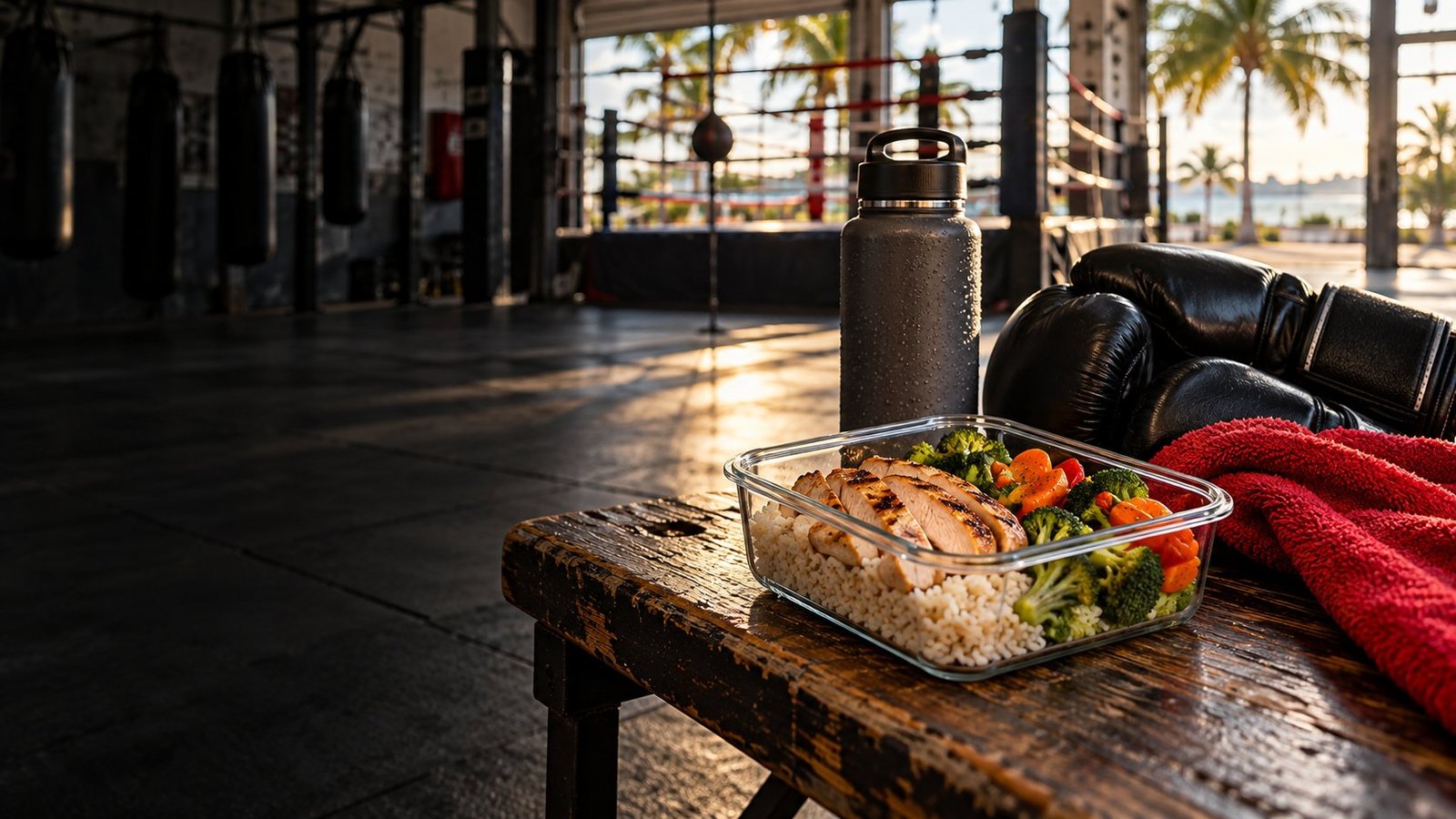
Boxing hydration for evening training starts before the first round. When your day is filled with work, errands, traffic, and Florida heat, water is easy to forget. Then the gym clock starts and you try to catch up in a single break. A better approach is simple enough to follow on an ordinary weekday. Prepare before class, drink during breaks, and recover after the last round.
This guide explains practical habits for beginners, not a fixed amount everyone must drink. It helps you build a routine without turning every round into a calculation.
Why the last hour is too late
A common scene starts around the first hard round. You arrive after a workday, warm up, and suddenly feel thirsty. The temptation is to drink half a bottle between combinations. That is a poor substitute for drinking across the afternoon. Evening boxing is demanding because you move, punch, recover, and repeat. You lose water through sweat even when the gym feels cool. Instead of treating water as an emergency between rounds, build a habit before you walk through the door.
Start with a glass of water during the afternoon. Keep a bottle where you will see it. Drink with your meal, then take more sips on the way to training. There is no need to force an enormous amount of water. A steady habit gives you more control than one frantic drink before class.
Build a drinking plan around your day
Your schedule determines your approach. Someone who works outside in Clearwater heat faces a different afternoon from someone in an air-conditioned office. Walking to the car, running errands, and coaching youth sports also count toward heat exposure. Think about what you drank and how much you sweated before your workout, rather than copying another boxer’s bottle size.
For an evening class, pair water with normal moments: lunch, a mid-afternoon break, and your pre-training meal. Keep a refillable bottle nearby. If you notice dark urine, unusual thirst, or you have barely drunk all day, pay attention to the pattern. Urine color is only a rough clue, not a hydration measurement or medical test. Individual needs depend on body size, temperature, activity, food, and health.
Do not confuse hydration with fueling
Water supports training, but water alone cannot replace food. A boxer who skipped lunch and arrives at class feeling flat may need to examine meal timing as well. Plan a meal that includes carbohydrates and some protein earlier in the day. If the gap is long, a small snack that sits well in your stomach can help you feel prepared.
For example, lunch might be rice, chicken, and vegetables. Later, toast or fruit may suit some people before class. Others prefer more time to digest. The goal is not a rigid meal rule. It is to arrive comfortable enough to move. Be cautious with experiments on days when you plan challenging rounds.
Make the bottle part of your equipment
Many beginners remember gloves and wraps but forget water. Put your bottle beside your gear before you leave home. A bottle with a lid you can open quickly makes breaks simple. Wash it after training. If you take class after work, keep an empty backup in your bag so you are not dependent on a vending machine.
During class, use the breaks your coach gives you. Take small, comfortable drinks, especially when you are breathing hard. Do not rush a large amount if your stomach feels unsettled. If you need a break, tell your coach. A good training session is not a contest to see who ignores thirst the longest.
What about electrolytes
Sweat contains water and salts, including sodium. For many ordinary workouts, water and regular meals are enough. Longer or hotter sessions, heavy sweating, or repeated classes can change the picture. Sports drinks are one possible option, but they are not automatically necessary for every beginner. Sugar content and portion size vary, so read labels rather than assuming more ingredients mean better training.
Avoid guessing a precise sodium target from an article. Your training duration, heat exposure, sweat losses, and medical history all matter. If you have a condition requiring fluid or salt limits or take medicines affecting fluid balance, follow the plan from your clinician rather than general gym advice.
Use the rounds to check how you feel
Your warm-up is a useful checkpoint. Are you alert, comfortable, and able to follow instructions? Can you settle your breathing during rest? Not every hard round means dehydration. Fatigue, heat, lack of food, poor sleep, and pacing also change how a session feels. Keep those factors separate instead of blaming every dip in performance on water.
Notice warning signs. Dizziness, headache, unusual weakness, nausea, or feeling faint are reasons to stop and let your coach know. Confusion, collapse, or severe heat illness symptoms require urgent medical attention. Never push through these symptoms to finish a round. Boxing skill is built through controlled practice, not by ignoring your body’s signals.
An easy evening routine
Try this on your next training day. In the morning, pack your bottle with your wraps. At lunch, eat a normal meal and drink water. In the afternoon, refill the bottle and have a snack if you need one. Before class, take comfortable sips rather than chugging. During scheduled breaks, drink according to thirst and conditions. After class, continue drinking with your evening meal.
A routine reduces decisions. It also helps you spot the days when preparation slips. If you spend the afternoon outdoors or have a longer session than usual, adjust for heat and sweating. You do not need to turn your gym bag into a chemistry lab. You need a plan you will repeat.
After the last round
The session ends, but recovery continues. Change out of sweaty clothes when practical. Drink water, eat dinner, and allow your body to cool down. A large weight drop after a sweaty session is not a fitness trophy. It often reflects fluid loss. The aim of training is to build technique, stamina, and confidence over time.
If you feel persistently unwell after training, seek medical advice. Otherwise, write down one thing to improve next time. Was your bottle empty before class began? Did you skip the afternoon meal? Did you wait until your mouth felt dry to drink? Make one change, then test it the next session.
Train with purpose in Clearwater
At Downtown Boxing, the important work happens one round at a time. Good footwork, attention, and clean punching take energy. Hydration is one piece of preparation alongside sleep, food, and an appropriate training pace. You do not need a complicated plan to start. You need to show up prepared, listen to the coaching, and make steady adjustments.
Check the class schedule, explore membership options, or read more training guidance in The Boxing Lab. Downtown Boxing is at 936 Cleveland St, Ste C, Clearwater, FL 33755. Bring your wraps, gloves, and water, and start with the basics.