
Boxing defense for beginners starts before the punch
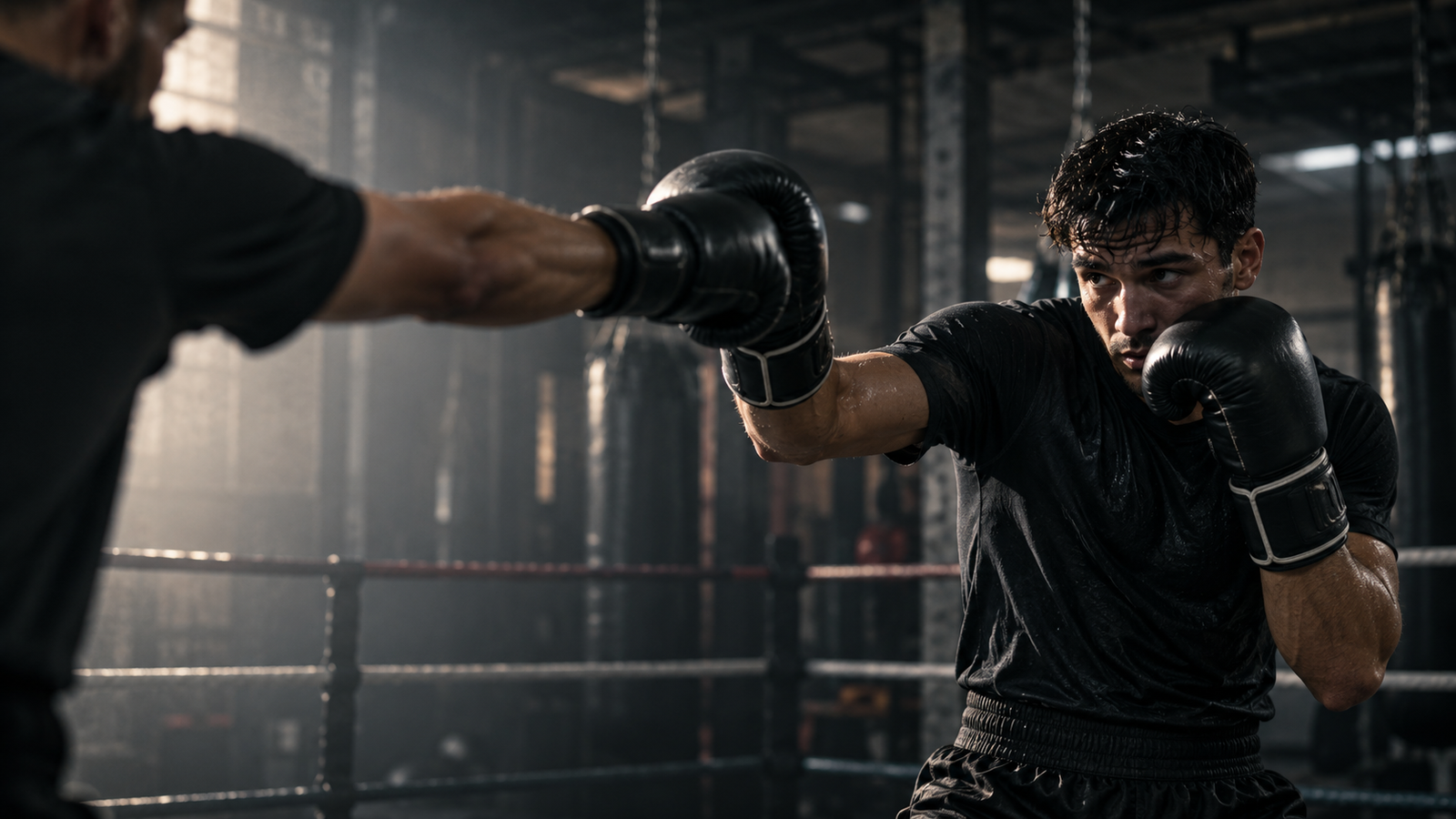
A beginner stands in front of a coach with both gloves high. The first jab comes slowly. The glove does not need a big swing. It only needs a clean answer.
Boxing defense for beginners is easier to learn when you stop treating every punch like a surprise. Defense starts with the stance, the guard, and the eyes. If your hands drift low before the jab comes, you have already made the job harder. If your feet are crossed, the next move has fewer options. If your eyes close when a glove comes toward you, the coach has less to build on.
The first useful goal is simple. Stay in a position where one small movement solves the problem. A catch uses a glove to meet the jab near your guard. A parry changes the line with a small touch. A slip moves the head off the line while the stance stays under you. Those tools look different, but they share the same rule. Do not make the defense larger than the punch.
This article starts with the catch because it gives beginners a clear place to begin. You see the jab, meet it with the correct glove under coaching, return the hand to guard, and keep your stance ready for the next action. Once that feels familiar, a coach can add steps, counters, parries, and slips without turning the round into guessing.
Build a guard that still lets you see
The gloves rise until they cover the whole face. The coach lowers them a little. The boxer can see again.
A guard is not a hiding place. Your hands protect important lines, but your eyes still need information. The exact hand position will depend on the stance and coaching style you are learning. The useful question is whether the guard lets you punch, defend, and move without rebuilding the whole position after every action.
Beginners often create two problems. The first is holding the gloves so tight to the face that the shoulders rise and the arms feel locked. The second is letting the hands float away after every punch. Both make defense late. Instead, think about returning to a repeatable home position. The jab leaves and comes back. The rear hand stays available. The elbows stay close enough to the body to help without being forced into one rigid shape.
Keep your eyes on the target area the coach gives you. Do not stare at one glove. A jab is easier to read when your vision takes in the shoulders, chest, and movement in front of you. You are learning patterns, not trying to react to the last inch of the punch.
If your stance disappears while you defend, review Boxing Footwork for Beginners. Defense works better when the feet still give you room to answer.
Catch first, then add more choices
The coach feeds another jab. The rear glove moves a few inches, the punch stops, and both hands are back where they started.
The catch teaches timing without asking a beginner to move the whole body at once. Under a coach’s direction, use the glove assigned to the jab line and meet the punch near your guard. The hand does not need to swat across the face. A large swing opens space and makes the return slower. The goal is a short movement that solves the jab and leaves the hand ready to work again.
After the catch, return to the same stance. Do not lean backward to make the jab miss by inches unless the drill calls for range movement. Do not reach forward with the catching hand. Let the punch come into the part of the guard you prepared. That keeps the action small and makes the next decision easier.
Once the catch is consistent, the coach can add a return jab, a step, or a second defensive choice. The order matters. If you add too many options before the catch is stable, the drill becomes a memory test. Build one answer first. Then give that answer a next step.
Drill 1: guard freeze and return
Before a partner adds any punch, the boxer learns where the hands should finish after their own jab.
This drill starts alone. Shadowbox one jab at a time and freeze after the hand returns. The point is not to pose. You are checking whether your defense still exists after offense.
- Set the stance and guard your coach taught you.
- Throw one jab at an easy pace.
- Bring the jab back to guard and freeze for one beat.
- Check whether both hands, chin, and feet are still in a usable position.
- Repeat without adding speed until the return feels automatic.
The habit matters because many defensive problems begin after a punch leaves. A beginner throws, admires the shot, and forgets the return. Guard freeze makes the end of the punch part of the technique. Once the return is reliable, remove the freeze and let the movement flow.
Drill 2: coach-fed catch and return
The pace stays slow enough to see the jab. The defender has one job and one answer.
Use this only under coaching with the pace and contact level set for the drill. One person feeds a jab. The defender catches it and returns to guard. Nothing else happens until the catch is clean.
- Start at a range the coach chooses.
- The feeder sends one controlled jab on command.
- The defender catches with the assigned glove using a short movement.
- Both hands return to guard before the next jab.
- After several clean catches, add one return jab if the coach calls for it.
The drill should look almost boring at first. That is useful. A beginner needs enough repetition to notice whether the catch is getting larger, whether the eyes close, or whether the stance changes. Slow work gives those errors nowhere to hide.
Drill 3: catch, step, reset
The catch lands. Instead of standing in the same place, the boxer takes one small step and rebuilds the guard.
Defense is more useful when it connects to position. After the catch is stable, add one step. The direction should come from the coach. It might be a small step back, a step outside, or a reset to the center of the drill.
- Catch one coach-fed jab.
- Return the catching hand to guard.
- Take one small step in the called direction.
- Set the feet before the next jab arrives.
- Repeat until the catch and step feel like one sequence.
Watch for the common mistake of crossing the feet during the escape. The defensive hand can be correct while the legs create a new problem. Keep the movement small enough that the stance still works when the next jab comes.
Drill 4: jab-only defense round
The drill finally starts to move. The defender still knows what can come, but timing and range now change from second to second.
This is a coach-supervised technical drill, not a free round. One boxer is limited to a jab at the pace the coach sets. The defender works only the approved responses. Start with the catch. Add a step or parry only when the coach says the first option is stable.
- The feeder uses only the jab.
- The defender keeps the guard and eyes available.
- Catch clean jabs with the short movement practiced earlier.
- Reset the stance after each exchange.
- Stop the round if the drill becomes too fast to keep the agreed technique.
Limiting the offense gives the defender a chance to learn timing without guessing through a full combination. The lesson is not that a jab is easy to defend. The lesson is that one known problem can teach you how to keep the guard, eyes, feet, and return connected.
When to add the parry and slip
The catch works. Now the coach asks for a smaller touch to change the jab’s line, then later asks the head to move instead of the glove.
A parry and a slip solve the same incoming line in different ways. The parry uses a small hand action to redirect. The slip moves the head off the line while the stance stays ready. Both look simple when an experienced boxer does them. Both become messy when a beginner makes the movement too large.
Add them after the guard and catch are reliable. The coach can show which hand parries which line, how far the hand should travel, and how the head moves without folding the body. Do not copy a deep slip from a highlight clip and assume it fits the drill in front of you. Small defensive movements are easier to connect to the next punch.
The goal is not to collect defensive moves. The goal is to know which answer you are practicing and finish in a position that still gives you choices. A catch that leaves you balanced is more useful than a dramatic slip that makes you stand up and reset before you can work again.
Read the jab without guessing
The defender stops watching the glove by itself. The whole front side of the boxer starts to give information.
Beginners sometimes try to predict every punch before it starts. That usually creates false reactions. A shoulder twitches and the hands jump. A small step looks like a jab and the guard opens. Instead of guessing, keep your vision broad enough to notice the body in front of you. The jab begins from a stance, travels through the shoulder and arm, and changes the distance between two people. Your job is to read the action that is there, not invent the next one.
This is another reason to keep the first defensive drill limited. When you know the feeder is using only a jab, you can practice seeing the start of the punch without worrying about four other attacks. As the coach adds choices, keep the same habit. Look at the boxer, not one glove. Let the guard stay available until a real action gives you something to solve.
If you find yourself reacting to everything, ask for a slower round. Speed is useful only when you can still recognize the problem. A slower pace lets you connect what you see with the catch, step, or other response your coach is teaching. That connection is the skill.
What progress looks like in beginner defense
A few sessions later, the jab comes and the boxer does less. The catch is shorter, the eyes stay open, and the feet are still ready.
Progress often looks like smaller movement. You stop swatting at the jab. You stop pulling the head far back. You stop turning one defensive action into three extra steps. The guard stays closer to home and the next decision arrives sooner.
Another sign is that defense starts connecting to offense. After a catch, you can return a jab without first fixing the stance. After a step, you are still close enough to work. The transition matters because boxing does not separate offense and defense into different rooms. One action sets up the next one.
Keep the goal narrow. Ask whether the catch stayed short, whether the eyes stayed available, and whether the stance survived. If those three pieces hold up, the coach has a base for more choices. If they disappear when the pace rises, lower the pace and rebuild them.
Start with one clean answer
The jab comes. The glove catches it. The hands are home. The next choice is still available.