
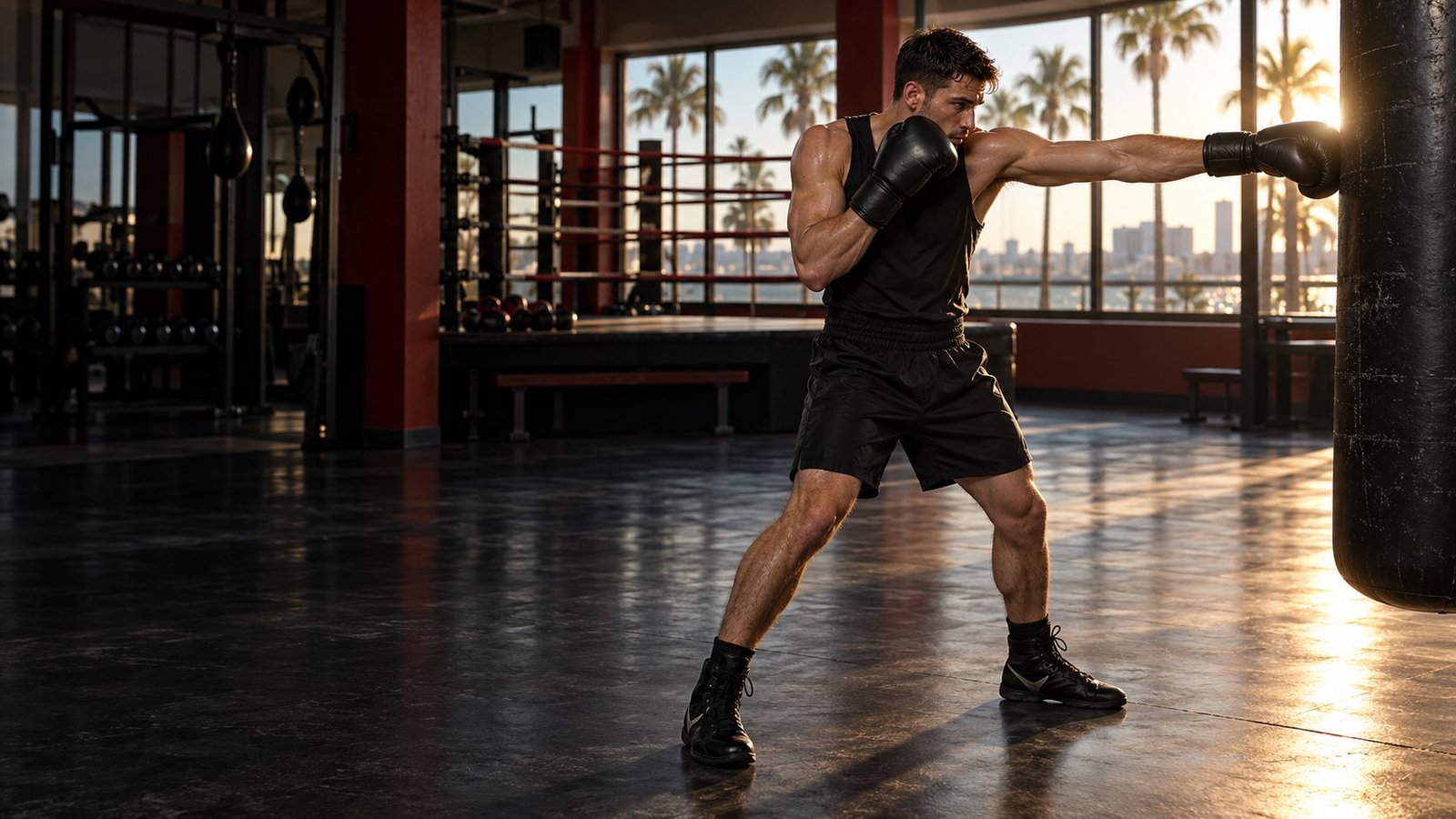
Two jabs need two decisions
A double jab is more than repeating the same arm movement as quickly as possible. Each punch needs a target, suitable distance, and a return you control. For a beginner, the first job is to recognize those parts in two separate repetitions. Start away from the bag with a coach watching. Throw one jab into the air, recover it, pause, and throw the second.
The pause is useful because it reveals whether you are ready to repeat the movement. If the first jab leaves your head beyond your stance or your glove hanging in front of you, the second starts from a problem. Reset instead of trying to solve that problem by punching faster. The sequence should begin and end in positions you understand.
Choose one purpose for each punch before the set. In an early drill, both jabs might touch the same point while you remain stationary. Later, a coach might give the first jab a different role from the second. Keep the early task small enough to observe. You are learning how to organize a pair, rather than collecting a fast sound against the bag.
Prepare the stance before the pair
Use the stance your coach has taught you. In an orthodox stance, the left foot and left hand lead. A southpaw reverses those positions. Keep room between the feet so you can move after the sequence. Avoid starting with both shoes on a narrow line. You should feel able to step without first rebuilding your base.
Keep the other glove available near your guard while the lead hand moves. Your eyes stay on the intended point, and your chin does not lift to follow the glove. Check this position without punching first. Then perform a single jab and recover. If the stance changes unintentionally, correct that before asking for two punches.
A comfortable beginning does not guarantee a balanced finish. After the pair, pause and notice whether you need an extra step to catch yourself. That extra step is information about the sequence. Reduce the effort or the reach and try again. Ask your coach which part moved beyond your control rather than assuming a wider or lower stance will fix every issue.
Let the first hand return far enough
Watch the return from the first jab rather than staring only at its extension. Bring the hand back to the recovery position your coach asks for before repeating the punch. In an introductory drill, a complete return gives you a clear reference. You can see whether each jab begins from a place you recognize.
Do not deliberately leave the glove resting on the bag and then push it forward again. That changes the movement you are practicing. Start with two individual jabs separated by a pause. As control improves, your coach can help shorten the transition while preserving the purpose of the drill. Speed follows an organized path.
Keep the shoulders ready to move rather than holding them tight throughout the set. Unnecessary tension often makes the second attempt feel hurried or crowded. Take a break between short sets and reestablish the guard. You do not need to complete a long combination to learn something useful. Five pairs with an observable return provide more feedback than a minute of movements you cannot remember.
Keep both punches within reach
Begin close enough to touch a stationary bag without leaning forward. Find that distance with a single controlled jab before trying the pair. Do not lock the elbow to reach a point which is beyond your range. Move your feet into a suitable position and repeat the distance check before the next set.
The first jab can make the bag move. That means the second may face a different distance even though your feet stayed in place. Notice the change instead of chasing it with your arm. Wait for the bag to settle during early practice. Keep the contact light enough that movement does not dominate the drill.
A second jab which misses does not automatically need more force. Ask whether the target moved, the hand path changed, or your starting distance was already too long. Change one factor and repeat. If you change your stance, target, effort, and rhythm together, you lose the ability to identify which correction helped. Let your coach choose the first variable to investigate.
Use a pause you can count
Practice a jab, a return, a pause, and another jab. Make the pause long enough to confirm your guard and balance before continuing. You can count the parts in your head if that helps keep the sequence deliberate. The count is a teaching aid rather than a permanent rhythm you must use forever.
After several controlled pairs, shorten the pause a little. Keep the same target and effort so the comparison remains useful. If the second jab begins before you can recover, restore the earlier pause. You are looking for a transition which stays organized, not the shortest possible gap between two glove sounds.
Avoid turning the whole exercise into an endurance test. Choose sets and rest periods with your coach which let you notice each repetition. When fatigue makes both punches blur together, stop the set. A break preserves the opportunity to learn from the next attempt. More repetitions are useful only while they still practice the action you intended.
Give the second jab its own target
Choose a visible point on the bag, such as an existing seam or a mark approved by the gym. In the first drill, use that point for both jabs. Watch whether the second glove contact lands where you intended. A pair which hits somewhere on the bag is not necessarily a pair which met your target.
If the first jab lands and the second slides away, slow the sequence and watch the path. The hand may be starting from a different recovery position, or the bag may have turned. Stop it between attempts so you can separate those possibilities. Your coach can observe the pair from an angle which shows the hand and bag together.
Once the same-target drill is repeatable, your coach may choose a different target task. Do not improvise a complicated change simply because the first set felt easy. A new task needs its own checks. Keep a record of what each jab was meant to do, then judge the attempt by that purpose rather than by its speed or sound.
Add a step as a separate lesson
Work on the stationary pair before connecting it to a step. Moving changes both balance and distance. If you add that demand while still struggling with the hand return, it becomes harder to identify what failed. A coach should help decide when the stationary drill is organized enough for a movement task.
For a first movement drill, take a step, establish your stance, and then perform the pair. Keep the parts separate long enough to see the order. The feet should arrive in a position from which both jabs remain within reach. Avoid stepping so close that the second punch feels crowded against the bag.
Do not assume every double jab needs forward travel. Different drills serve different purposes, and your coach may ask you to remain in place or move another way. Follow the assigned sequence. Learning one clear task well gives you a foundation for the next, while changing your own instructions halfway through the set makes comparison difficult.
Recover after the second jab
The second punch is not the end of the repetition. Bring the hand back and finish with your stance and guard available. Pause there before resetting. This final moment reveals whether the pair left you organized or whether you relied on another action to hide the loss of balance.
Ask yourself whether you could move in another direction without crossing your feet. You do not need to perform an exit during every early attempt. First establish a finish from which an exit would be possible. Your coach can add the movement when it belongs to the drill rather than treating it as a rescue from a falling position.
If the rear glove drops during the pair, shorten the sequence and practice the lead-hand movement at a lower effort. Keep the rear hand’s task in mind without squeezing the whole body into tension. A coach can help you distinguish a guard position you can maintain from one you are forcing. The goal is a position which remains usable while you work.
Score a set of five pairs
Choose three checks before starting. Both jabs reach the intended target, the rear hand remains in its assigned guard, and you finish balanced. Perform five pairs with a pause between them. Count a pair only when it meets all three checks. Write the result without turning it into a judgment of your potential.
A score such as three controlled pairs out of five gives the next set a starting point. Name the check which failed most often. Perhaps the second jab reached beyond your range, or the lead glove failed to return. Choose one correction with your coach and repeat the same task. Keep the target and effort similar so you can assess the change.
Do not compare a stationary score with a moving drill as though the conditions were identical. Adding a step changes the task. Record that difference in your notes. The purpose of a training record is to guide practice, and an honest description helps more than a higher number obtained by changing what the number measures.
Try three focused rounds
Use the first round for single jabs and deliberate returns. Find the range, check the rear glove, and settle after each attempt. Choose a round length which fits your experience and leaves room to notice errors. Rest when the checks disappear rather than waiting for the timer to make the decision for you.
Use the second round for stationary pairs. Begin with the pause you practiced and shorten it only when the second jab remains controlled. Work in sets of five pairs and record one observation between sets. Avoid adding another punch because the bag happens to be in reach. Keep the double jab as the task for this round.
Use the third round to repeat the correction your coach selected. That might mean staying stationary rather than progressing to a step. Finish with a few single jabs and compare their recovery with the beginning of the session. Leave knowing which part became more repeatable and which question you need to bring back to the coach.
Keep partner work agreed and supervised
A bag does not choose when to move or how to respond. A successful bag drill therefore does not prove the double jab will work against another person in every situation. Partner training introduces timing, changing distance, and shared decisions. Let your coach choose a task which suits both people.
Agree on the purpose and limits before beginning. Do not surprise a friend with punches to test whether your sequence is quick enough. Use the equipment, pace, and contact level your coach requires. If either person stops understanding the exercise, pause and clarify it. A learning drill depends on cooperation even when its subject is a combat sport.
Bring the same observation habits into partner practice. Know what each jab is meant to accomplish and which finish you are checking. The details may differ from the bag exercise, but the need for a clear task remains. Judge the session by the agreed checks rather than treating every reaction as a reason to change the plan without discussion.
Bring one question to your next class
At Downtown Boxing in Clearwater, ask your coach to watch the part of the pair you find hardest to repeat. Be specific. Tell them whether the second jab misses, the first hand stays extended, or your feet move after the sequence without your intention. A visible action gives both of you something concrete to investigate.
Keep your next practice small enough to understand. Establish the stance, find your range, perform one jab and recover, then repeat it as a pair with a pause. Review the boxing programs if you need a coached starting point. Add speed or movement only when your coach’s checks remain available under the added demand.
Finish with a record you will use again. Note the drill, the result from five pairs, and the correction which helped. Begin the next session with that information rather than guessing what to improve. The aim is to make each jab a decision you control, including its target, its return, and the balanced position which follows it.