
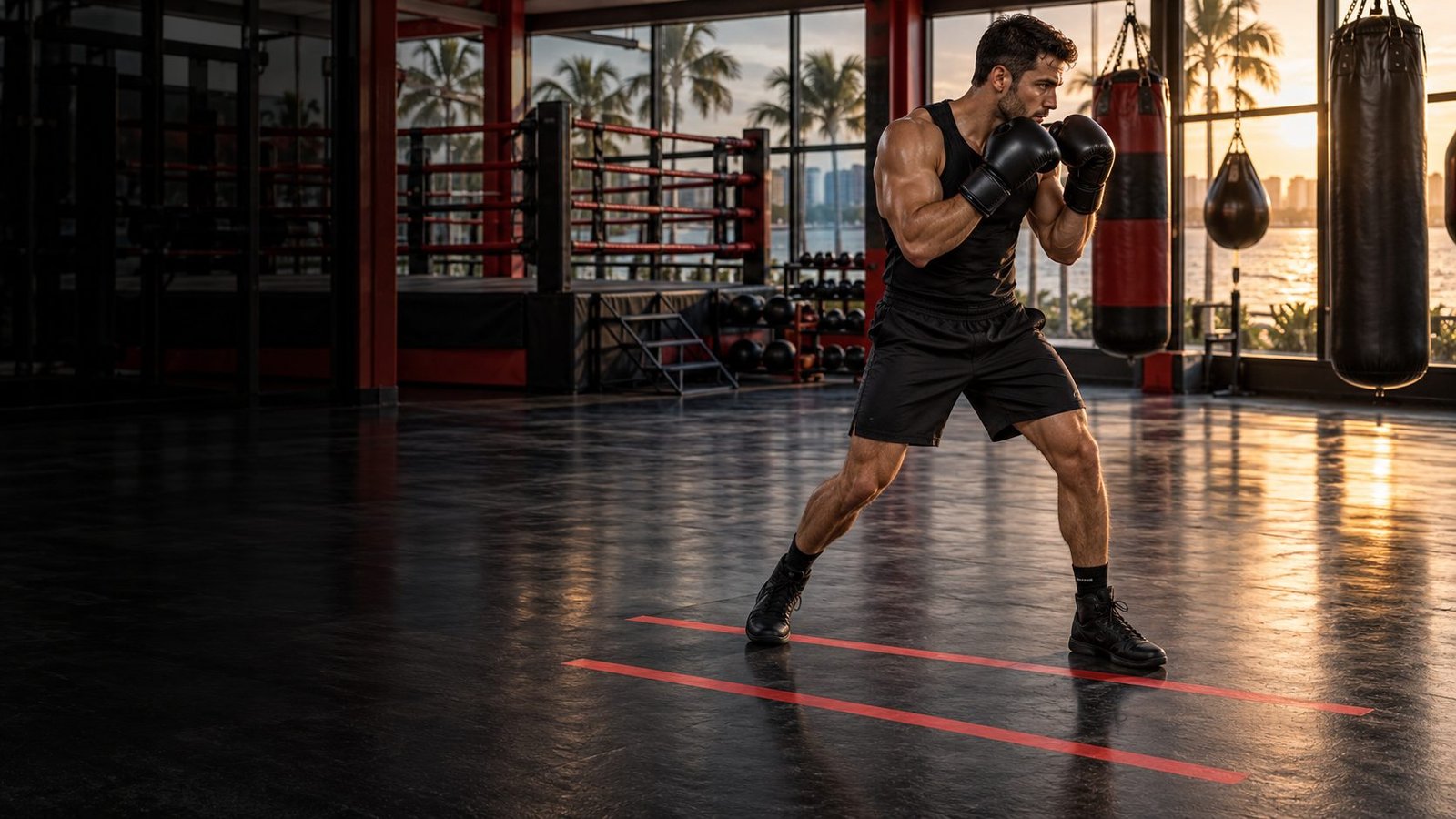
Choose a direction before moving
Boxing side step footwork gives you a way to change position without turning your back or crossing your feet. Start by choosing whether you intend to move left or right. Keep your eyes on a point in front of you and let your feet carry your stance sideways. The purpose of the first drill is to finish in a position from which you could move again. Distance traveled is a secondary question.
Stand away from the bag so impact does not compete for your attention. Put your gloves in the guard your coach has taught you. Take one step, stop, and inspect the result. Your feet should still have space between them. You should not need a second unplanned step to prevent yourself from falling. If the finish is difficult to hold, reduce the movement and begin again.
A side step is a movement skill rather than a promise of avoiding every punch. A line on the floor does not respond to you, and a bag does not choose to follow. Learn the sequence first. Your coach will decide how to introduce timing, partner movement, and other demands. Keeping those stages separate makes the purpose of each repetition easier to understand.
Let the foot nearest the direction lead
For a basic step to the left, begin with the left foot. Let the right foot follow enough to restore the stance. For a step to the right, the right foot moves first and the left foot follows. This order creates room for the following foot. Starting with the opposite foot often brings the shoes together before you have moved the base.
Practice the order without trying to move quickly. Say the direction to yourself, move the appropriate foot, and restore the stance. Pause after the pair of movements. Avoid turning the pause into a rigid pose with locked knees. You still want to feel ready to move. The check is whether you arrived where you intended while preserving a base you recognize.
Your stance may not look identical to another member’s stance. Ask your coach to help you choose spacing which suits your body and the drill. Do not force your shoes onto someone else’s measurements. Use the same checks from one attempt to the next. The feet stay separated, the body remains balanced, and your guard stays available when the movement ends.
Keep the step within your balance
Begin with a smaller distance than you think you need. A large first step stretches the stance and makes the following movement harder to organize. A smaller step lets you feel the sequence without reaching across the floor. Increase the distance only when you can stop deliberately and return to another direction without reorganizing your feet.
Let the head and trunk travel with the base rather than tipping sideways before a foot moves. If you lean first, you may feel as though you have to chase your upper body with your shoes. Reset into balance before the next attempt. A coach watching from the front can help you distinguish moving your position from bending out of it.
Watch for an unnecessary rise and fall. You do not need to bounce upward every time you move sideways. Keep the knees ready to bend and choose an effort which allows you to notice the finish. If you leave the floor without intending to, slow down. The first goal is a step you can repeat rather than an explosive movement you cannot yet stop.
Use a floor reference without staring at it
A floor seam or a strip of tape approved by the gym can help you see where the stance begins and ends. Place the reference where it will not create a trip hazard or interfere with another member’s station. Look at it before the set. During the movement, keep your eyes on the point ahead. Inspect the feet after you stop.
Try one step left and a reset, then one step right and a reset. The reference helps you notice whether you drift forward or backward without intending to. Do not treat a small difference as a failure by itself. Ask whether the movement still met its purpose. The reference supports observation, while your coach determines which changes matter.
Keep the practice area clear on both sides. Sideways movement needs room beyond the place your shoulders occupy at the start. Check nearby bags, benches, and other people before moving. If the space changes during class, stop and choose another area with your coach. A drill should fit the training floor rather than requiring everyone else to avoid an unexpected path.
Separate footwork from punching at first
Begin with movement only. Take the side step, settle, and return to your starting point. Keep the gloves near your guard instead of swinging the arms to help you balance. If your hands move away from the guard during the step, reduce the distance and watch the finish. Adding a punch before you solve this makes two tasks harder to interpret.
When the movement feels repeatable, add a jab into the air after you settle. Step, establish the base, jab, recover the hand, and pause. These separated parts give you a clear order to practice. Your coach can help you combine movement with punching later. There is no need to rush that transition while you are still learning which foot starts.
Use five attempts rather than an uninterrupted round at first. After each attempt, ask whether you remained ready when the glove returned. Count a repetition only when the foot order, guard, and finish meet your checks. The count gives you a starting point for another set. It should help you choose a correction rather than become a judgment about your talent.
Notice how each direction differs
You may find one direction easier than the other. That is a reason to observe, not a reason to rush the harder side. Keep the same drill and effort in both directions so the comparison is useful. Notice whether the first foot moves too far, the following foot closes the space, or your upper body begins leaning before the step.
Give the harder direction its own set of five attempts. Choose one correction and repeat it long enough to see whether it helps. If the feet keep meeting, shorten the following movement. If the stance becomes stretched, shorten the first movement. Ask your coach to watch when the adjustment does not change the result. A visible pattern makes that conversation easier.
Avoid solving a difficult direction by turning your whole body toward it. A basic lateral step should preserve the orientation your coach asked you to keep. Turning may belong to a different drill, but it changes the task you are measuring here. Know which movement you intend before you begin. Otherwise a successful turn can hide an unfinished side step.
Build a three part practice session
The first part is a foot order rehearsal. Work without a bag or punches and use one step at a time. Move left for several attempts, then right. Choose a set length which leaves enough attention to observe each finish. Rest before the movement becomes a shuffle. You are learning a sequence, and repeating a sequence you cannot describe makes correction harder.
The second part adds a pause and jab into the air. Keep the step separate from the punch until both actions stay organized. Between sets, write one observation. You might note that the rear glove drops or the following foot travels too far. Pick one of those observations for the next set. Several corrections at once are difficult to apply while moving.
The third part connects two directions without punching. Step left, settle, step right, and settle again. Do not rebound immediately as though the first movement were a spring. Make each finish deliberate. If changing direction causes the shoes to cross, return to individual steps. The progression should expose what you can repeat, not conceal a problem inside a faster sequence.
Bring the bag in only when the feet are ready
Set up at a distance from a stationary bag which your coach considers suitable. Take one side step and stop before throwing. Check whether the new position leaves room for the punch you intend. A lateral movement changes your relationship to the bag, and the original distance may no longer feel the same. Adjust with your feet rather than reaching across your body.
Use a light jab to check range after settling. Recover the hand and reset for the next attempt. Do not chase a swinging bag while trying to remember the foot order. Stop it between sets or wait for it to settle. The purpose is to learn how a changed position affects your ability to make controlled contact.
If you keep missing after the step, remove the punch and inspect the arrival position. Did you face the intended point? Did your stance stay usable? Did you move farther than planned? Solve one of these questions before increasing effort. A harder punch does not answer a distance question. Your coach can help you choose which part of the sequence to simplify.
Correct crossing before adding speed
When feet cross, stop and identify which shoe traveled past its intended place. The following foot should restore the stance rather than continue through it. Practice with a shorter following movement and pause after the feet settle. If you cannot tell when the crossing begins, ask your coach to observe from a position where both shoes remain visible.
Avoid staring down throughout the drill to police every movement. Look at the feet after stopping, or use a short recording with the gym’s permission and your coach’s guidance. The aim is to connect the feeling of the movement with an observable result. You still need the habit of keeping your eyes available while changing position.
Do not add speed to escape the awkward feeling. A faster crossing step remains a crossing step. Reduce the task until you can preserve the space between your feet, then repeat it. Progress means the intended order remains available as the demands increase. There is no deadline requiring you to connect punches or work continuously before that foundation is ready.
Keep partner practice agreed and coached
A partner adds timing and a moving reference. That changes the drill, even if the foot sequence remains familiar. Agree on the task before beginning and follow your coach’s instructions about pace, equipment, and contact. Do not turn a footwork exercise into a surprise test of whether someone can avoid punches. Both people should know what they are learning.
A first partner task may involve following a movement without contact, but your coach should choose the exercise. Keep the area clear and pause if either person loses track of the purpose. Good partner practice depends on shared understanding. Being uncertain about the next action is a reason to clarify the task rather than improvise a harder exchange.
Judge the exercise by its agreed checks. If the goal is to preserve stance while moving sideways, watch that result. Do not claim the movement is ready for unrestricted sparring because one controlled drill went well. Skills develop under different demands, and coaching helps decide when the next demand is appropriate. Keep each conclusion tied to the practice you actually completed.
Leave with a correction you can repeat
At Downtown Boxing in Clearwater, bring one question about the direction which felt harder. Describe what you observed rather than calling yourself slow or uncoordinated. Tell your coach which foot crossed, when the guard dropped, or where the stance became stretched. That information gives the coach a movement to watch and a correction to test.
Keep a brief record after class. Note the drill, direction, number of attempts meeting your checks, and the correction which helped. Review the boxing programs if you need a coached place to begin. Your next session should start with a task you understand. A record is useful when it changes what you practice, not simply when it fills a page.
For your next set, choose one direction, move the foot nearest that direction, and let the other foot restore the stance. Stop with your guard available and your body balanced. Repeat the task before adding a jab, a bag, or a partner. The goal is to arrive ready for the next action. Every controlled finish gives you another chance to practice that habit.
When reviewing the record, compare similar attempts. A set performed without punches does not measure the same task as a set performed after a combination. Label the difference so you do not mistake a harder drill for lost progress. If fatigue changes the movement, record that observation and discuss the session length with your coach. The next practice should give you enough control to learn from the repetition. Keep the question practical. What will you watch, which action will you repeat, and how will you know the finish met its purpose?