
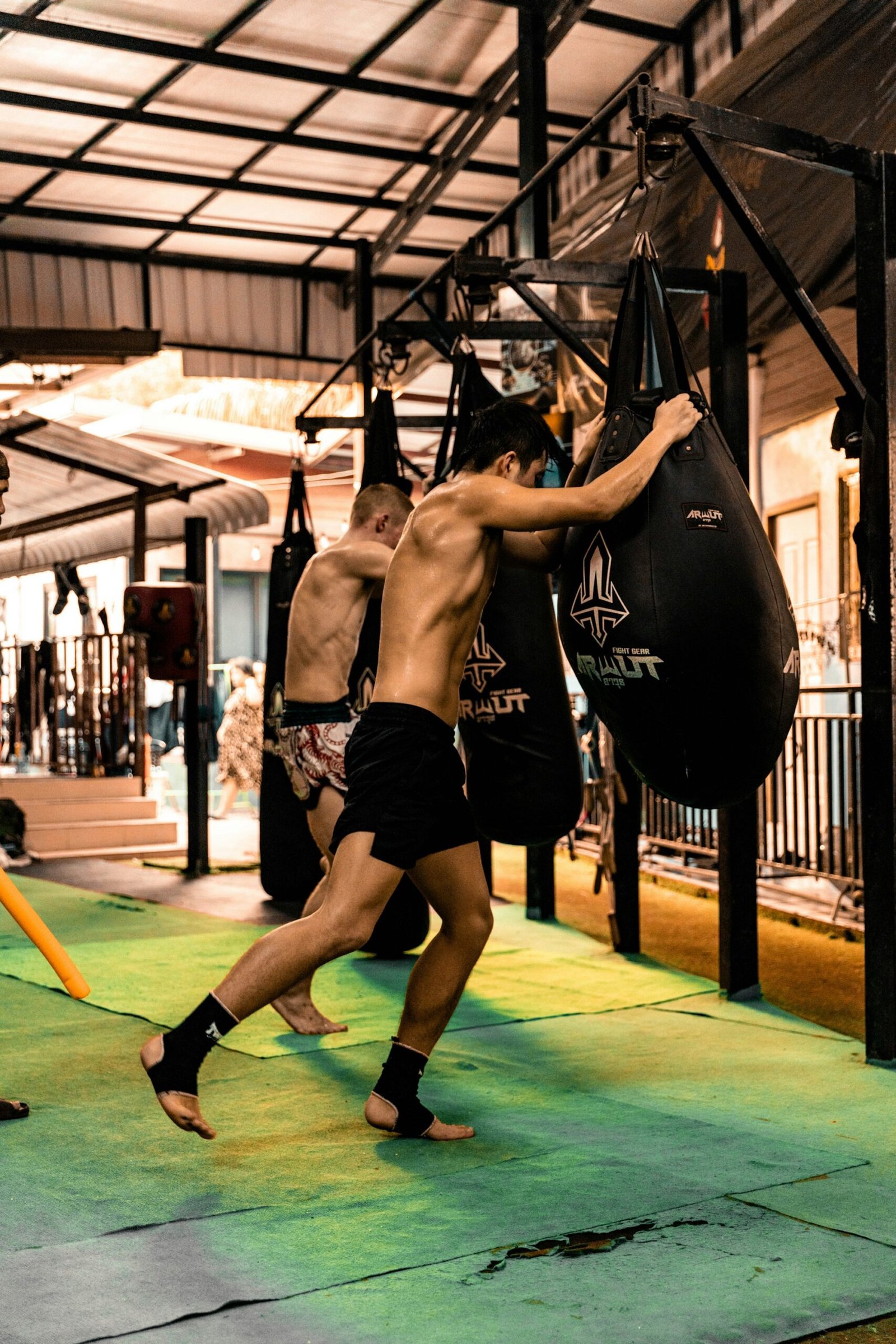
A shared floor needs shared rules
A newcomer steps through the gym entrance while the heavy-bag timer counts down.
Boxing gyms combine people moving in several directions at once. One person practices a jab, another circles a bag, and someone else moves backward after a defensive slip. Unlike a treadmill row, the training area does not have fixed boundaries around every athlete. Your first job is to understand the flow of the room. Arrive before class starts, check in, and tell the coach whether this is your first boxing session. Ask which part of the floor belongs to the class and where you should wait for instructions.
Even experienced athletes have to learn the rules of a new facility. One gym rotates bags after each round while another keeps stations assigned for a whole circuit. Some classes use partner mitt drills, and others spend most of the time shadowboxing. Watch the group instead of assuming a familiar routine applies. A minute spent observing protects both your practice and the people working next to you. It also gives the coach a chance to choose a drill that matches your experience.
Good etiquette is not a set of gestures to impress coaches. It makes training predictable. People perform better when they know nobody will cut behind them, take their equipment mid-round, or turn a light-contact drill into an unexpected contest. Every member contributes to that expectation through small decisions. Put belongings where the coach directs, listen while directions are being given, and move only when you know the path is clear.
Enter without disrupting the round
A coach explains a combination to a line of beginners while a late member arrives.
When class is already underway, do not stride through an active circle of athletes to reach a heavy bag. Wait at the edge where staff can see you. The coach will indicate a safe time to join and explain the current exercise. If the group is working in timed intervals, you might need to wait until the bell before finding a station. Use those seconds to get your gloves ready and understand what is happening, not to begin throwing punches on the sidelines.
If you know you will be late, allow for the possibility that the warm-up or partner assignments are already finished. Ask whether you should join the current session or wait for the next block. Missing five minutes does not justify skipping a safety explanation. An athlete who rushes into advanced partner work without understanding the rules risks disrupting someone else’s training. A respectful arrival is more valuable than completing every planned round.
Arrive with clean training clothes, a water bottle, and equipment the gym requires. Leave your shoes, bags, and jacket in their assigned places instead of building a pile next to the mat. Keep your phone silenced while the coach speaks. When directions are unclear, ask one focused question before the exercise begins. A beginner who asks where to start is doing the right thing.
Keep the movement lanes open
A boxer pivots away from a bag as someone starts walking toward the water area.
A boxer can step sideways or backward without warning because those movements are part of the drill. Walk around active stations, not between an athlete and a heavy bag. Watch for jump ropes, moving partners, and coaches crossing the room. If the path is unclear, wait for the rest interval. A moment of patience is better than stepping into the arc of a swinging bag. Give each person enough room to make the movement the coach requested.
Floor space belongs to the activity, not the loudest member. Choose a shadowboxing spot where your punches and steps will not enter another person’s area. Before changing direction, check your surroundings. Do not carry a phone in one hand while weaving through people who are working. If a coach needs to cross between stations, stop your movement to make a safe lane. Awareness is part of training, not something separate from technique.
Keep water and towels out of walkways. A spilled bottle near a pivot line creates a slipping hazard, and a loose hand wrap on the floor can catch a foot. Clean up anything you drop. If a floor mat has lifted at an edge, tell staff rather than stepping over it and forgetting. The person after you deserves a floor free of hidden problems. Safe shared space depends on everyone noticing more than their own bag.
Learn how bag rotations work
The bell rings and two people are ready to use the same heavy bag.
Do not claim a bag simply because it is empty at the moment. Someone may be resting between rounds, collecting water, or following a rotation the coach established. Ask which bag is yours and whether the next bell changes the station. When a partner has been assigned, be ready to alternate as instructed. If you are in open gym rather than class, politely offer a round-by-round rotation when another person is waiting. Clear agreements prevent people from feeling pushed aside.
Never leave gloves draped over a bag to reserve it while you talk across the room. If you take a longer break, release the station. Stop striking a bag while staff adjust its height or check the chain. Do not move a bag to make more room without approval. The equipment is positioned for the training floor as a whole, and changing one station can narrow another person’s safe movement area.
Use waiting time well. A few slow shadowboxing repetitions build familiarity with a stance and guard. You can rehearse the coach’s footwork cue without touching equipment or interrupting anyone. If the rotation surprises you, ask for clarification rather than refusing to move. The objective is productive training for every member, not ownership of one spot. Cooperation gives the class a steady rhythm.
Care for the gear you touch
Loaner gloves and wraps sit on a rack beside several jump ropes.
Ask before using gloves, wraps, mitts, ropes, or headgear that do not belong to you. A pair left near a bench may belong to someone taking a water break. Use wraps when required and ask for help learning to fit them. Gloves should fit securely without forcing the wrist into an awkward position. Do not share mouthguards or personal water bottles. If the gym supplies loaner gear, follow its cleaning and return process rather than dropping used items back into a clean bin.
Wipe shared surfaces as staff direct and wash your hands before and after training. Sweat is unavoidable, but leaving a wet bench or putting damp gloves away carelessly is avoidable. Report damaged stitching, broken handles, loose chains, and torn mats. Do not test whether broken equipment still works by training harder on it. A coach needs to remove unsafe items before someone is hurt.
Treat heavy bags according to the drill. Do not yank a hanging bag sideways by the chain, kick it without instruction, or pull it into another station. Return equipment to its location after use. Keep loose wraps and tape out of walkways. These habits do not require specialized knowledge. They show respect for the next athlete who wants to begin a round with equipment ready to use.
Ask before starting partner work
Two members face each other while waiting for the coach to explain a drill.
Partner work begins with agreement. Confirm whether the task is mitt work, controlled movement, defense practice, or sparring. A technical drill is not an invitation to land hard punches. Ask which targets are permitted, how fast the movement should be, and what signal means stop. If your partner is new, choose a pace both of you can follow. There is no benefit in surprising someone with speed or contact they did not accept.
Respect the word stop immediately. Your partner may need to adjust equipment, rest, ask a question, or report discomfort. Do not pressure them to continue because the bell has not sounded. If a height difference or experience gap makes the exercise difficult, ask the coach to adapt the drill or switch pairs. Those are coaching decisions, not personal rejections. Your role is to remain a trustworthy partner who follows the assigned task.
During mitt work, wait until the target is presented before throwing. During defensive practice, maintain the distance and control the coach set. Do not photograph or film a partner without permission, even if you consider the clip useful for learning. Trust makes skill development possible. When both people know the rules will be respected, they can concentrate on movement instead of guarding against unexpected behavior.
Accept a correction and try it
The coach asks a beginner to return a glove to the cheek after a jab.
Corrections are part of boxing class. They are observations about an action, not statements about your character. Listen without interrupting, repeat the cue if you need clarity, and make the next attempt slower. You might hear that your elbow is lifting, your chin is drifting, or your rear foot is losing balance. Work on one change instead of adjusting every detail at once. The coach can judge whether the correction helped.
Avoid lengthy debates while classmates wait for the next round. If another gym taught a different technique, ask how the current drill should be done here. Save broad conversations for after class. You should always speak up when something causes pain, confusion, or concern about safety. Respect for instruction does not require silence about a problem. A useful conversation keeps the athlete and coach focused on solving the movement.
Do not correct strangers across the room or shout advice over the coach. You may not know what that person is practicing or what modification they were given. Encouragement is different from unsolicited instruction. You can tell a teammate they worked with focus, offer to help return equipment, or simply make room for them. Leave technical decisions to the people leading the class.
Work at a pace you control
A beginner hears punches landing hard on the next bag while practicing a slower combination.
A heavy bag rewards speed with noise, which can make a beginner chase sound instead of technique. Start at an effort that lets you hold your stance, keep your wrist aligned, and bring the hand back to guard. A punch that swings you off balance is not improved by being louder. Your coach may ask you to slow down for footwork or accuracy. Follow that instruction even if someone else is moving faster. The drill has a purpose beyond exhaustion.
Be mindful of members with different training goals. One person might be preparing for a competition, another may be learning coordination, and a third may be returning after time away. Never mock a beginner’s pace or pressure someone into sparring. Treat everyone as an athlete learning within the limits of the assigned workout. When the room supports different skill levels, people are more willing to practice without embarrassment.
Keep your energy under enough control to stop when asked. In a busy gym, a bell, a coach’s voice, or a partner’s request may require an immediate pause. If you cannot stop a punch or change direction when necessary, reduce speed. Control protects your training partners and gives you better feedback. Progress comes from repeatable rounds, not from winning an imaginary contest against the bag beside you.
Handle disagreements without escalation
Two members reach for a bag after a rotation and realize they heard different instructions.
Misunderstandings happen even in a well-run class. If you take someone else’s station, apologize and move. If your water spills, clean it. If you accidentally interrupt a drill, give the person space and ask where you should stand. Brief repairs protect the room from turning into an argument. You do not need to explain why you were distracted before addressing the problem. Correct the situation first.
If someone cuts across your station or uses equipment you expected, make a simple request. Please wait until the bell, or I thought this bag was assigned to our group, is enough to begin. When a dispute continues, ask the coach for a ruling. Do not settle conflict through threats, aggressive sparring, or deliberately crowding another athlete. A training gym needs rules that work when emotions run high, not only when everyone agrees.
Some boundaries need immediate staff attention. Report unwanted contact, repeated unsafe conduct, harassment, or pressure to spar. Do not treat these as part of a tough atmosphere you must accept to belong. A respectful boxing community takes safety seriously and makes room for people to speak up. You are there to learn a sport, not to prove you will tolerate behavior outside the exercise.
Respect privacy in a training space
A member raises a phone while another athlete is still learning a basic drill.
People attending class have not automatically agreed to appear in videos or photos. Ask permission before filming, especially when children are present. Follow gym policies on recording, posting, and camera placement. Avoid filming someone else’s mistakes or personal coaching conversation. A short clip of your own work can help you study technique, but arrange it with staff and make sure the phone does not occupy an active walkway.
Privacy includes ordinary conversation. Do not question other members about their weight, injuries, or reasons for joining unless they choose to share. Some people attend for competition, others for fitness, and others for a sense of routine. Nobody needs to justify their goals to the room. Keep feedback about yourself, and listen when another person prefers not to discuss personal matters.
Phones also divide attention. If you need to answer a message, step out of the class space during a rest interval. Do not scroll while holding a partner’s mitts or waiting for a contact drill to restart. A training partner should know you are watching their movement. Courtesy is often nothing more complicated than giving the people in front of you your full attention.
Finish by preparing the room for the next class
The session ends and members return gloves and ropes to their racks.
When the coach calls the final round, stop. Do not throw one more hard combination while people begin moving stations. Collect your wraps, bottle, towel, and tape. Clean shared surfaces according to the gym’s instructions. If a rope was borrowed, put it back where it belongs. Check the floor for anything you dropped. A clean reset is one of the easiest ways to contribute to the class even when you are new.
Take your cooldown to an appropriate area instead of blocking the entry where the next group is arriving. If you want coaching advice, wait until the instructor has finished watching active athletes. Ask one question you can act on next time. For example, which stance mistake should I watch during my next bag round? A clear answer makes the next class more useful than an abstract request to get better at everything.
Notice what worked beyond punches. Did you find your station without disrupting another person? Did you follow the bell, stay aware of walking lanes, and communicate with your partner? Those habits matter every time you train. As they become automatic, you spend less mental effort navigating the room and more on developing boxing skill.
Your beginner boxing gym checklist
A member returns the last pair of gloves and heads toward the exit.
Before class, arrive early enough to check in and find your station. Keep your bag and bottle out of movement lanes. Ask before touching shared equipment and learn the bag rotation. During class, listen when the coach explains the exercise, work at a controllable pace, and leave clear space around other athletes. Tell your partner what you need and respect a stop signal at once. If you see a hazard, report it instead of walking away.
After class, return equipment, collect belongings, and make the floor ready for the next group. If you want a recording, secure permission first. If you have a technical question, ask when the coach is available. These habits are not difficult, but doing them every visit builds trust. Fellow members stop worrying about where you might move and begin seeing you as a reliable training partner.
At Downtown Boxing in Clearwater, beginners should ask staff about the class plan and equipment rules on arrival. The best first session is one where you learn a few skills, follow the training rhythm, and leave ready to return. A person who shares space, trains safely, and respects others belongs on the floor long before they throw an impressive punch.