Boxing Lab. October 16, 2026.
Training Grocery List for Beginner Boxers: Buy Food That Supports Every Round
A practical weekly shopping system for training energy, recovery, hydration, and meals you will make.
Boxing asks your body to repeat short bursts of work while you stay balanced, alert, and coordinated. Your grocery list should support those demands across the week. It does not need expensive powders or foods with a fighter printed on the package. It needs dependable sources of carbohydrate for training, protein for repair, colorful produce for micronutrients, fats for meals and hormones, and fluids you will drink. When those basics are in your kitchen, eating for boxing becomes a routine instead of a daily decision.
Begin with your real schedule. Count the sessions you expect to complete, then note which ones happen before work, after school, or in the evening. Hard bag rounds and conditioning usually need more fuel than a technique session. A beginner who trains three times each week needs enough food for training days and ordinary meals between them. Buy for the week you will live, not an imaginary perfect week. This keeps the plan useful and reduces food waste.
Carbohydrates supply much of the energy used during boxing rounds. Put familiar choices in the cart first. Rice, oats, potatoes, bread, tortillas, pasta, cereal, bananas, and other fruit all work. Choose foods you digest well and know how to prepare. A bag of rice is useful only if you will cook it. Oats are useful only if you enjoy breakfast or an easy snack. Your list should make the next meal easier, not create a shelf of foods you avoid.
Use faster and slower choices for different moments. Oats, potatoes, rice, and whole grain bread fit meals several hours before training. Bananas, toast, applesauce, or a small bowl of cereal often fit closer to class because portions are easy to control. After training, carbohydrate helps refill the energy you used. Pair it with protein rather than treating either nutrient as a complete recovery plan. Portion needs differ, so adjust by hunger, training length, body size, and coaching or medical guidance.
Protein supports repair after mitt work, bag rounds, strength training, and daily activity. A useful grocery list includes several sources so every meal does not taste the same. Eggs, chicken, turkey, lean beef, fish, Greek yogurt, cottage cheese, milk, tofu, beans, and lentils all contribute. Frozen fish or chicken can reduce waste. Canned tuna, salmon, chicken, or beans can rescue a meal when time is short. Pick options that match your budget and cooking access.
Spread protein through the day instead of saving all of it for dinner. Eggs or yogurt can support breakfast. Chicken, tofu, beans, or tuna can anchor lunch. Dinner can use another serving. A post-training meal does not require a complicated recipe. Rice with eggs and vegetables, a turkey sandwich with fruit, yogurt with oats and berries, or potatoes with fish can cover the main recovery needs. Consistency across many meals matters more than one perfect shake after one hard round.
Fruit and vegetables add vitamins, minerals, fiber, water, and variety. Buy produce you can finish before it spoils. Bananas and apples travel well. Oranges, melon, berries, mango, and grapes provide different textures and flavors. For vegetables, spinach, carrots, peppers, tomatoes, broccoli, cabbage, onions, and mixed frozen bags are practical choices. Frozen produce counts and often lasts longer. The goal is not a colorful photograph. The goal is food that appears in meals throughout the week.
Match fresh and frozen choices to your calendar. Fresh spinach might work early in the week, while frozen broccoli can wait for later meals. Chopped vegetables save preparation time if the cost fits your budget. Keep one fruit where you see it and one frozen option ready for oatmeal or yogurt. Add vegetables to meals you already make rather than building unfamiliar recipes around them. Rice bowls, omelets, pasta, sandwiches, soups, and tacos all accept produce without changing your entire routine.
Florida heat and a warm gym increase the importance of a drinking routine. Start with water and a bottle you will carry. Buy enough for your normal setup, whether you use filtered tap water, refillable jugs, or bottled water. Do not wait until class begins to think about fluids. Drink through the day and arrive prepared. Dark urine, a dry mouth, headache, or unusual fatigue can signal that your routine needs attention, though symptoms also have other causes.
Electrolyte products have a place during long, hot, or heavy-sweat sessions, but they do not replace water or meals. Compare labels and avoid assuming a bright package is required for every workout. Milk, food, and normal meals also supply electrolytes and fluid. If you have a medical condition, take medication, or have been told to limit sodium or fluids, follow your clinician’s plan. For most beginners, a filled bottle and a habit of drinking before class solve more problems than a cabinet full of products.
Fats support health and make meals satisfying. Useful grocery choices include olive oil, avocado, nuts, seeds, peanut butter, eggs, and fatty fish. You do not need all of them in one week. Choose two or three that fit meals you already eat. A spoon of peanut butter with toast, olive oil on vegetables, avocado in a rice bowl, or nuts with fruit adds energy and flavor without requiring another cooking project.
Large, high-fat meals can feel heavy when eaten close to boxing class. Keep those meals farther from training when possible, then use smaller portions near the session. This is not a reason to fear fat. It is a timing decision based on comfort. Notice how your stomach responds during footwork, rope work, and bag rounds. Record what you ate and when. Over several sessions, you will learn which meals support movement and which ones leave you sluggish.
Give pre-training foods one visible place in the kitchen. Put oats, bread, cereal, rice cakes, bananas, applesauce, or crackers where they are easy to find. Add a protein choice such as yogurt, milk, eggs, turkey, or tofu. When class is two or three hours away, choose a meal with carbohydrate, protein, and a comfortable amount of fat. When less time remains, reduce the portion and select food that has worked before.
Do not test a large new meal before sparring, hard conditioning, or a demanding bag session. Training is a poor time to discover that a food bothers your stomach. Keep notes on portion, timing, energy, and comfort. A simple entry such as banana and yogurt ninety minutes before class gives you information you can repeat. The purpose of the shelf is to remove friction. You should be able to choose, eat, pack your gear, and leave without debating every ingredient.
Recovery food fails when the plan depends on cooking from scratch after a late class. Buy two backup meals that take ten minutes or less. Examples include microwave rice with eggs and frozen vegetables, a tuna sandwich with fruit, Greek yogurt with oats and berries, or rotisserie chicken with potatoes. Keep the ingredients together. When you arrive home tired, the easiest complete meal should be easier than skipping dinner or ordering food you did not plan to buy.
A useful post-training meal includes protein, carbohydrate, fluid, and some produce when available. It does not have to be eaten within a tiny window, but delaying food for hours can make recovery and sleep harder, especially if you trained without a recent meal. Start drinking, change out of wet gear, then eat a normal meal. If appetite is low, use a smaller option first and finish the rest later. Your backup plan protects consistency on the nights when motivation is gone.
Meal patterns make a grocery list easier to repeat. Pattern one is a bowl. Combine rice or potatoes, a protein, vegetables, and a sauce or seasoning. Pattern two is a handheld meal. Use bread or tortillas with eggs, turkey, tuna, chicken, tofu, or beans, then add fruit. Pattern three is a fast breakfast. Combine oats or cereal with milk or yogurt and fruit, or use eggs with toast and vegetables. These patterns cover many meals without demanding a written recipe.
Choose ingredients that work in more than one pattern. Chicken can fill a rice bowl or a sandwich. Eggs can support breakfast or a quick dinner. Spinach can enter an omelet, pasta, soup, or bowl. Bananas can pair with oats, yogurt, toast, or a snack. Flexible ingredients reduce the risk that one missed cooking night ruins the plan. They also let families share food while each person adjusts portions. Repetition is not failure when the meals remain balanced and fit your week.
Divide the list into essentials and optional items. Essentials might include rice, oats, eggs, beans, frozen vegetables, bananas, water, and one additional protein. Optional items might include berries, specialty yogurt, individual snack packs, sauces, or convenience products. Buy the essentials first. If money remains, add options that improve variety or save time. This keeps the cart aligned with training rather than letting packaging set the budget.
Compare price per serving, not only the price on the shelf. A larger package saves money only when you can store and finish it. Store brands, frozen produce, dried beans, canned fish, family packs, and planned leftovers can lower cost. Waste is expensive, so freeze portions before they spoil. Use one inventory night each week to finish open foods. A boxer does not need a luxury diet. A dependable low-cost meal eaten on schedule supports more work than a costly product left unused.
Set aside one short preparation block after shopping. Cook a pot of rice or potatoes, prepare one protein, wash fruit, and portion a few snacks. You do not need seven identical containers. Prepare enough to shorten the next two or three decisions. Keep seasonings and sauces available so the same base foods do not feel identical. Label leftovers with the date. Place the meals you need first where you will see them.
Food safety matters when meals travel to work, school, or the gym. Keep cold food cold with an insulated bag and ice pack. Refrigerate cooked food promptly. Reheat leftovers until steaming and discard food that has sat in unsafe conditions. Wash hands, boards, and knives after handling raw meat. Keep raw foods separate from ready-to-eat foods. These habits protect training because stomach illness removes more rounds than imperfect meal timing. When in doubt about storage time or temperature, choose safety.
Run the same basic grocery system for four weeks before judging it. Track class attendance, hunger, stomach comfort, energy during later rounds, sleep, and food waste. You are looking for patterns, not a perfect score. If you arrive hungry every evening, add a planned afternoon snack. If food spoils, buy less fresh produce or use more frozen options. If meals feel too heavy before class, shift part of the portion until after training.
Body weight alone does not explain whether the plan supports boxing. Pay attention to performance, recovery, mood, and consistency. Avoid aggressive restriction, dehydration, or rapid weight-cutting without qualified supervision. Beginners gain more from learning skills, attending class, and recovering between sessions than from chasing a scale number. If you have allergies, diabetes, kidney disease, digestive problems, an eating disorder history, or another condition affecting food choices, work with a licensed clinician or registered dietitian. Your grocery list should support training and health together.
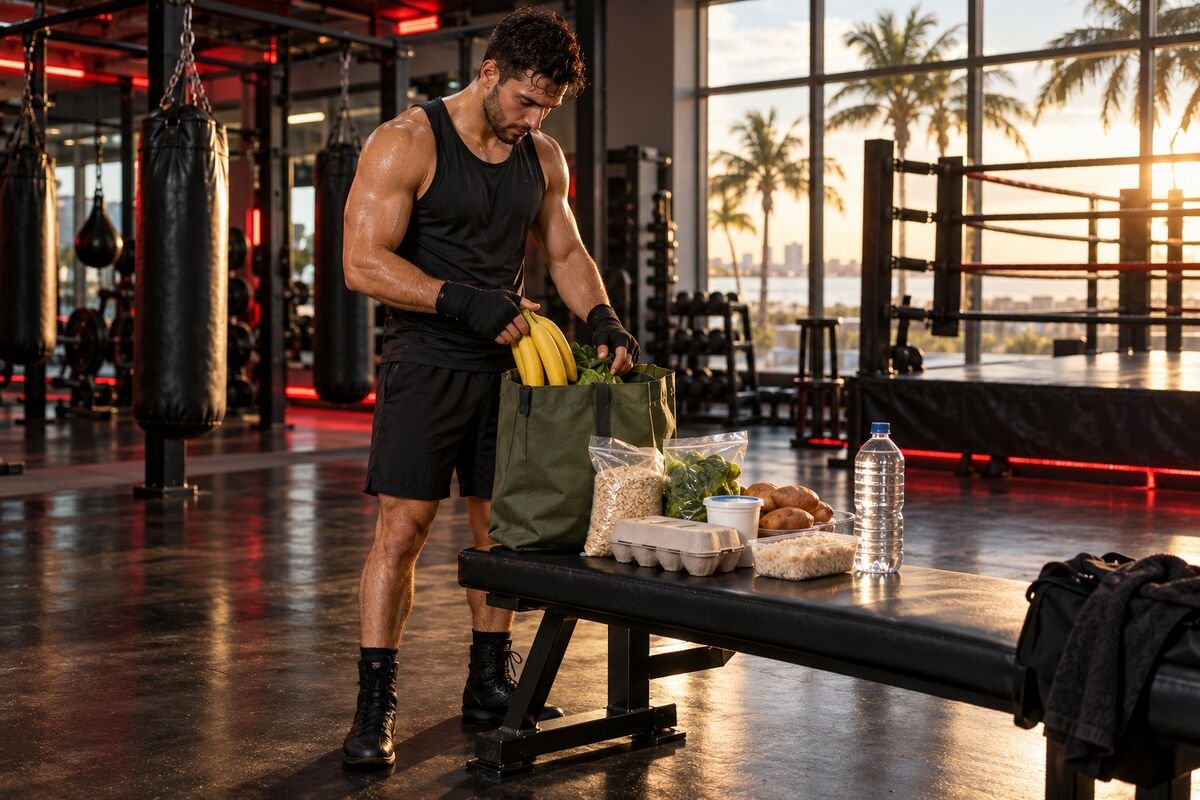
Use this starting list for one adult training several times per week, then change quantities for your household and appetite. Choose one or two grains or starches, three protein foods, four fruits and vegetables, two fat sources, water, and two quick snacks. A sample cart could include rice, oats, potatoes, eggs, chicken, Greek yogurt, bananas, apples, spinach, frozen mixed vegetables, olive oil, peanut butter, bottled water, and crackers. Add seasonings, sauces, and foods needed for family meals.
Before checkout, ask four questions. Do I have food for the meal before class. Do I have a meal for after class. Do I have a portable snack. Do I have a backup meal for a late night. If any answer is no, fix the gap with one item rather than buying several unplanned products. At home, place the training foods where they are visible and write the next three meals on a note. The list works when it leads to meals, not when it remains a receipt.
Food supports the work, but coaching gives the work direction. Review the Downtown Boxing programs, see the membership options, or contact the Clearwater gym to plan your next session.